



What's Happening?
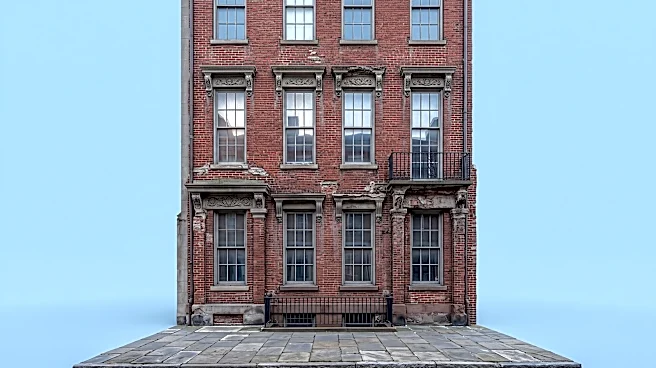
The Iowa City City Council voted 6-1 on Tuesday night to reverse a decision by the Historic Preservation Commission, thereby approving St. Mary’s Catholic Church’s request to demolish two buildings in the Jefferson Street Historic District. The buildings,
located at 302 and 306 East Jefferson Street, are owned by the church and currently serve as parish offices. St. Mary’s Catholic Church intends to replace these structures with a new ministry center designed to accommodate its growing parish. Although a structural engineer deemed both buildings unsound, the Historic Preservation Commission had denied the demolition request in early October. Approximately 150 people, mostly parishioners, attended the council meeting, with over 20 speaking in favor of demolition, citing the buildings' deterioration and the commission's unrealistic decision. Fr. Andrew Rauenbuehler, the church’s pastor, emphasized the parish’s growth and called the commission’s decision an “excessively absolute interpretation of an undefined standard.” Councillor Josh Moe cast the sole dissenting vote, arguing that while replacement was necessary, the commission had correctly interpreted city code, suggesting a need to rethink city policy on historic buildings.
Why It's Important?
This decision by the Iowa City City Council carries significant implications for historic preservation efforts and urban development within the city. The reversal of the Historic Preservation Commission's ruling highlights a potential tension between community development needs, such as accommodating a growing church parish, and the preservation of historical structures. It sets a precedent for how future conflicts between development and preservation might be resolved, potentially signaling a shift in the balance of power towards development interests. For St. Mary's Catholic Church, the vote allows them to proceed with plans for a new ministry center, addressing their spatial needs. However, for historic preservation advocates, this outcome represents a loss, raising concerns about the long-term protection of Iowa City's architectural heritage. The dissenting council member's call for a reevaluation of city policy on historic buildings suggests that this issue may prompt broader discussions about urban planning and heritage conservation.
What's Next?
Following the Iowa City City Council's vote, St. Mary’s Catholic Church can now move forward with the demolition of the two buildings at 302 and 306 East Jefferson Street. However, this approval is limited to the demolition phase. The church will still be required to seek and obtain separate approval for the second phase of its plan, which involves the construction of the new ministry center. This next step will likely involve submitting detailed architectural plans and undergoing further review by city planning departments and potentially other commissions. The councilor who voted against the reversal, Josh Moe, has called for a broader conversation about rethinking the city’s policy regarding historic buildings, suggesting that this issue may lead to future policy discussions or amendments concerning historic preservation guidelines in Iowa City.
Beyond the Headlines
The Iowa City City Council's decision to allow the demolition of historic buildings for St. Mary's Catholic Church's expansion touches upon complex ethical and cultural dimensions. It underscores the ongoing debate in many communities about how to balance the needs of contemporary growth and development with the imperative to preserve historical integrity and cultural heritage. The argument that the buildings were structurally unsound and no longer viable for the church's needs highlights the practical challenges of maintaining older structures. However, the reversal of a preservation commission's decision can be seen as undermining the authority and purpose of such bodies, potentially signaling a devaluation of historical context in urban planning. This event could trigger a broader community dialogue about the definition of 'historic' value, the economic feasibility of preservation, and the role of religious institutions in shaping urban landscapes, potentially leading to long-term shifts in how Iowa City approaches its architectural past.