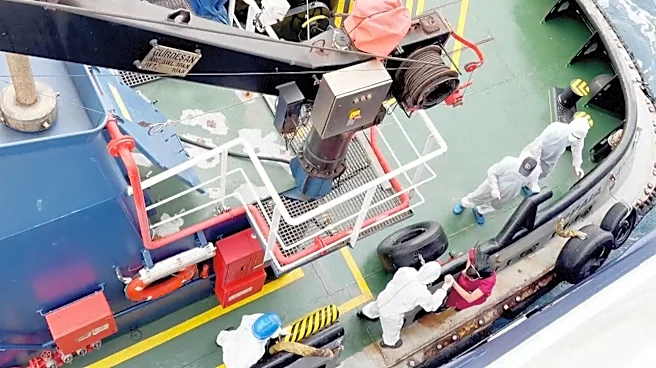








What's Happening?
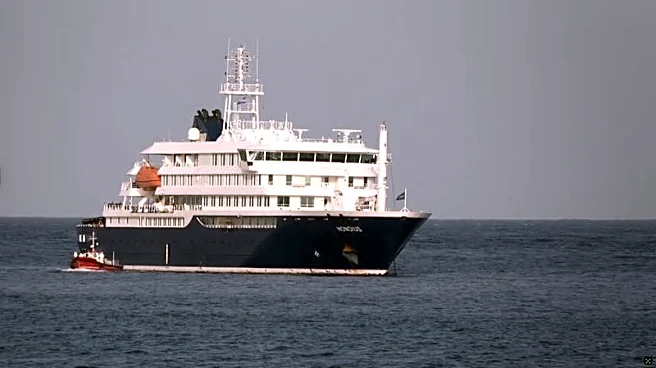
The president of the Canary Islands, Fernando Clavijo, has expressed strong opposition to the Spanish government's decision to allow the MV Hondius, a cruise ship affected by a hantavirus outbreak, to dock in the archipelago. The ship, which has been
denied entry by Cape Verde due to health concerns, is carrying passengers and crew with confirmed and suspected cases of hantavirus. The World Health Organization has confirmed several cases, including fatalities, and is coordinating medical evacuations. Clavijo has requested an urgent meeting with Spanish Prime Minister Pedro Sánchez, criticizing the decision as lacking technical basis and sufficient public safety assurances. The situation has sparked a debate over the handling of infectious disease outbreaks and the responsibilities of national and regional authorities.
Why It's Important?
This development highlights the complexities of managing public health crises involving international travel and maritime operations. The decision to allow the MV Hondius to dock in the Canary Islands raises questions about the adequacy of current protocols for handling infectious disease outbreaks on ships. The opposition from Canary Islands officials underscores the tension between national and regional authorities in addressing public health risks. The incident may lead to increased scrutiny of international health regulations and the need for improved coordination and communication among countries and health organizations. The potential human-to-human transmission of the Andes strain of hantavirus adds urgency to the situation, emphasizing the need for effective containment measures.
What's Next?
As the MV Hondius approaches the Canary Islands, health authorities will need to implement rigorous screening and containment procedures to prevent further spread of the virus. The Spanish government and Canary Islands officials are likely to continue discussions to address safety concerns and ensure a coordinated response. The World Health Organization will play a critical role in monitoring the situation and advising on best practices for managing the outbreak. The outcome of this incident may influence future policies on maritime health regulations and international cooperation in handling infectious disease threats.