



What's Happening?
A recent letter to the editor highlights the unadorned grave of Silas Soule, a historical figure known for his principled stand during the Sand Creek Massacre. Soule, who was a Union Army captain, refused to follow orders to attack a peaceful encampment
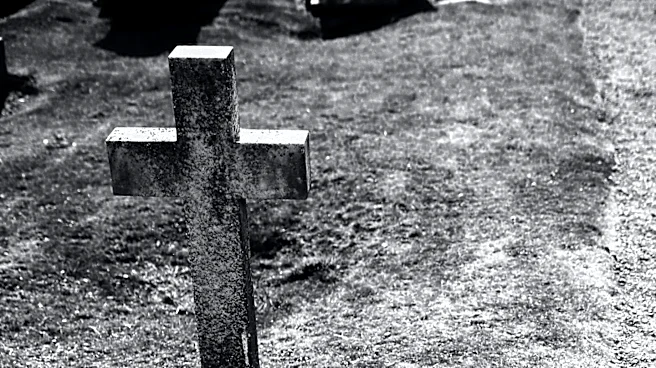
of Cheyenne and Arapaho people in 1864. His actions and subsequent testimony against the massacre's perpetrators marked him as a whistleblower of his time. Despite his significant contribution to justice and moral courage, his grave in Denver's Riverside Cemetery remains largely unrecognized, with only minimal adornments. This has prompted reflections on how society honors its heroes and the importance of remembering those who stood for justice.
Why It's Important?
The story of Silas Soule is a poignant reminder of the complexities of American history and the individuals who have shaped it through acts of courage and integrity. Soule's actions during the Sand Creek Massacre highlight the moral dilemmas faced by military personnel and the potential consequences of standing against unjust orders. His largely unrecognized grave raises questions about how society chooses to honor its historical figures and the narratives that are prioritized in public memory. This discussion is particularly relevant in contemporary times, as debates over historical monuments and the representation of history continue to evolve. Recognizing figures like Soule can contribute to a more nuanced understanding of history and inspire future generations to uphold principles of justice and integrity.
What's Next?
The attention drawn to Silas Soule's grave may prompt local and national discussions about how to appropriately honor historical figures who have made significant contributions to justice and human rights. There could be initiatives to better commemorate Soule's legacy, possibly through educational programs, memorials, or public ceremonies. Additionally, this could lead to broader conversations about the representation of history in public spaces and the criteria used to determine which figures are celebrated. Stakeholders such as historians, educators, and community leaders may engage in dialogue to ensure that the stories of unsung heroes are preserved and shared with wider audiences.
Beyond the Headlines
The case of Silas Soule's unadorned grave touches on deeper issues of historical memory and the ethics of commemoration. It raises questions about whose stories are told and remembered, and how these narratives shape cultural and national identity. The lack of recognition for Soule's bravery may reflect broader societal tendencies to overlook certain aspects of history that do not align with dominant narratives. This situation underscores the importance of inclusive historical storytelling that acknowledges diverse perspectives and contributions. By revisiting and honoring the legacies of figures like Soule, society can foster a more comprehensive and equitable understanding of its past.