

What's Happening?
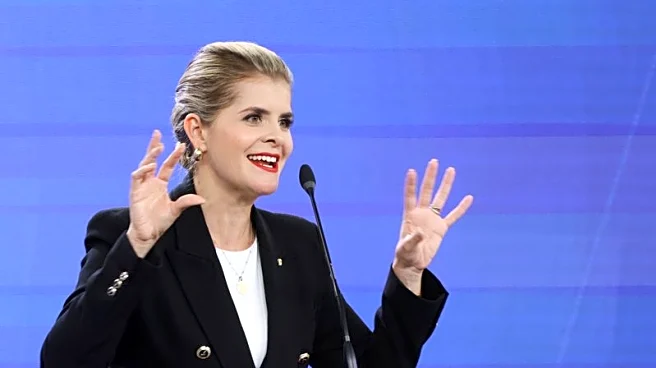
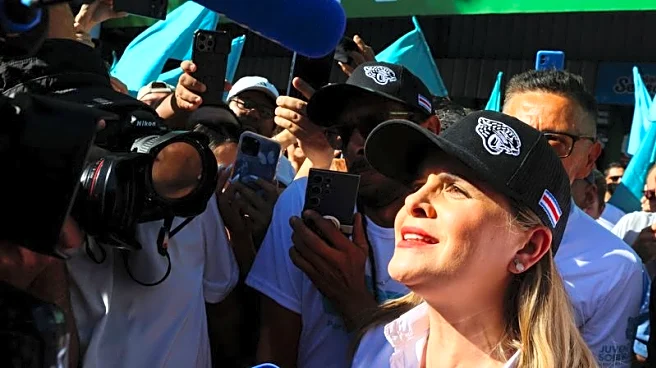
Costa Rican voters are participating in a general election to choose between continuing the policies of outgoing conservative populist President Rodrigo Chaves or opting for new leadership. Laura Fernández, Chaves' former minister of national planning
and economic policy, is leading the polls as the candidate for the Sovereign People's Party. The election is taking place against a backdrop of rising crime and violence, which has become a significant concern for voters. If no candidate secures at least 40% of the vote, a runoff will be held on April 5. Additionally, Costa Ricans are electing a new 57-seat National Assembly, where Chaves' party is expected to make gains but not achieve a supermajority.
Why It's Important?
The election is crucial for Costa Rica as it faces a surge in crime rates, which many attribute to the policies of the current administration. The outcome will determine whether the country continues with Chaves' confrontational style or shifts towards reform. The political landscape is also significant as it could impact the country's ability to address social issues and economic challenges. A supermajority in the National Assembly would allow Chaves' party to make significant changes, including appointing Supreme Court magistrates, which could alter the judicial landscape.
What's Next?
If Laura Fernández wins the presidency, she is expected to continue Chaves' policies, potentially leading to further confrontations with the judiciary and legislature. The election results will also influence the composition of the National Assembly, affecting legislative decisions and the balance of power. The focus will be on how the new administration addresses crime and whether it can restore public confidence in the government.
Beyond the Headlines
The election reflects broader regional trends where conservative populists have gained power amid social upheaval. Costa Rica's political dynamics are part of a larger narrative in Latin America, where countries are grappling with crime and economic challenges. The election will test the country's democratic resilience and its ability to navigate complex social and political issues.