








What's Happening?
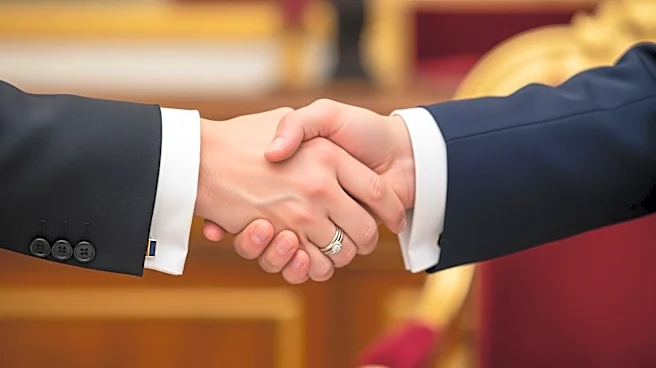
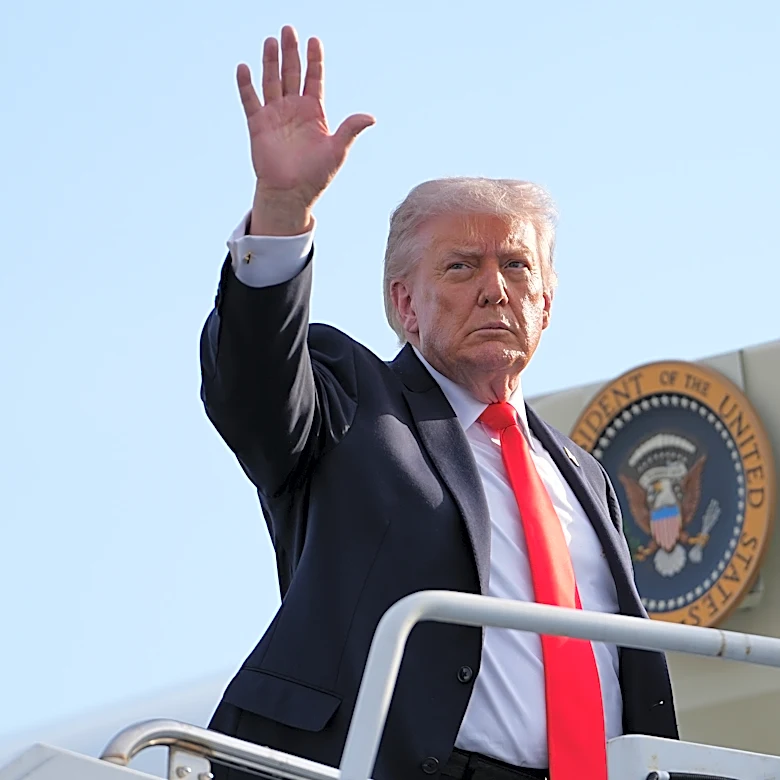
During King Charles III's visit to the United States, a handshake between President Trump and the King has drawn significant attention. The exchange, described by body language expert Patti Wood as a 'battle,' deviated from traditional royal etiquette.
Typically, royal protocol dictates that the royal figure decides whether to initiate a handshake. However, President Trump extended his hand first, a move seen as a departure from these norms. The handshake was characterized by a firm grip and prolonged eye contact, which is unusual in such formal settings. This interaction has been analyzed as a power play, with Trump employing his known handshake tactics, such as pulling the other person closer and controlling the handshake's duration.
Why It's Important?
The handshake between President Trump and King Charles highlights the cultural and diplomatic nuances involved in interactions between world leaders. Such gestures are often scrutinized for underlying messages about power dynamics and respect. In this case, the deviation from royal protocol could be interpreted as a challenge to traditional norms, reflecting broader themes of political assertiveness. This incident may influence public perception of diplomatic relations between the U.S. and the U.K., as well as President Trump's approach to international diplomacy. The handshake serves as a microcosm of the complexities involved in maintaining decorum while asserting national identity and leadership style.
What's Next?
As King Charles's visit to the U.S. continues, further interactions with American leaders will be closely watched for similar breaches of protocol or diplomatic gestures. The ongoing analysis of such exchanges may impact future diplomatic engagements and the strategies employed by leaders to convey power and respect. Observers will be keen to see if subsequent meetings adhere more closely to traditional etiquette or if they continue to reflect a more assertive approach.
Beyond the Headlines
The handshake incident underscores the evolving nature of diplomatic etiquette in a globalized world. As leaders navigate complex international relationships, the balance between tradition and modernity becomes increasingly significant. This event may prompt discussions about the relevance of traditional protocols in contemporary diplomacy and how they can be adapted to reflect changing power structures and cultural expectations.