








What's Happening?
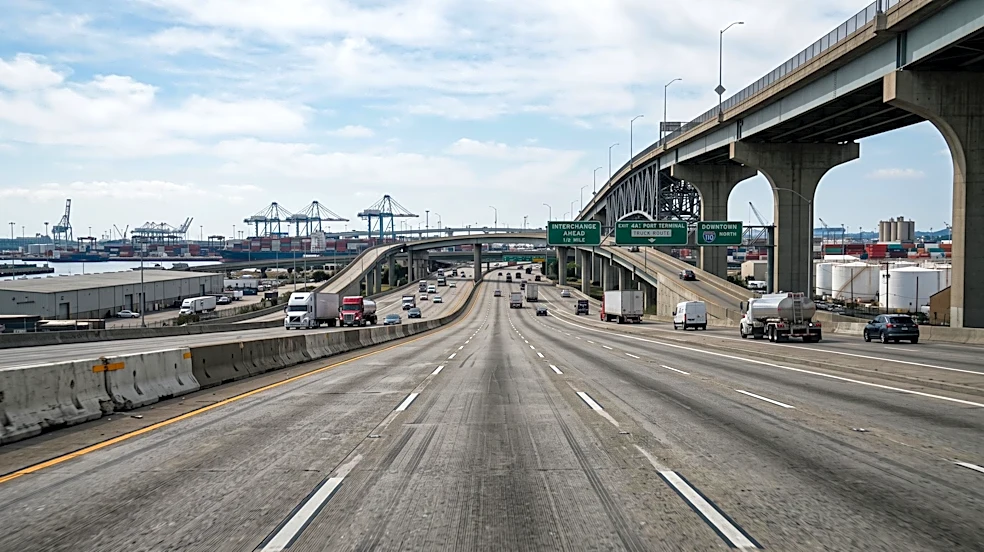
Heavy truck traffic is causing significant delays on and around the Goethals Bridge, particularly near the Staten Island Expressway exit for Forest and Gulf avenues. This congestion has been an ongoing problem, creating traffic snarls on access roads
and affecting nearby surface streets, including the exit ramp to Goethals Road North and the entrance to the Howland Hook terminal. Councilmember Frank Morano, a Republican representing the Island’s South Shore, has introduced Int. No. 1050. This legislation, co-sponsored by Council Minority Leader David Carr, aims to alleviate truck traffic by requiring the Department of Transportation to establish freight impact zones. These zones would be designated in areas near freight terminals where action is needed to prevent congestion and disruptions caused by long queues of trucks waiting to enter facilities.
Why It's Important?
The persistent truck congestion on the Staten Island Expressway and its surrounding areas has a substantial impact on local commuters, businesses, and the overall flow of goods. Delays caused by heavy truck traffic lead to increased travel times for residents, higher operational costs for commercial vehicles, and potential disruptions to supply chains. The proposed legislation by Councilmember Morano seeks to mitigate these issues by creating designated freight impact zones. This initiative could improve traffic efficiency, reduce pollution from idling trucks, and enhance the quality of life for Staten Island residents by easing traffic snarls. Successful implementation could serve as a model for other urban areas facing similar challenges with freight logistics and infrastructure.
What's Next?
The proposed legislation, Int. No. 1050, will proceed through the legislative process within the city council. If passed, the Department of Transportation would be mandated to establish the freight impact zones. This would involve identifying specific areas near freight terminals that are prone to congestion and developing strategies to manage truck queues and traffic flow. The effectiveness of these zones will depend on their design and enforcement, potentially requiring collaboration between city agencies, port authorities, and trucking companies. The outcome of this legislative effort could significantly alter traffic patterns and freight management practices on Staten Island.
Beyond the Headlines
The issue of truck congestion highlights broader challenges in urban planning and infrastructure development, particularly in port cities. As e-commerce and global trade continue to expand, the volume of freight traffic is likely to increase, placing further strain on existing road networks. This situation underscores the need for integrated transportation planning that considers both passenger and commercial vehicle needs. The establishment of freight impact zones could represent a proactive approach to managing the environmental and economic impacts of logistics, potentially influencing future urban development policies to better accommodate freight movement while minimizing disruption to local communities.