


What's Happening?
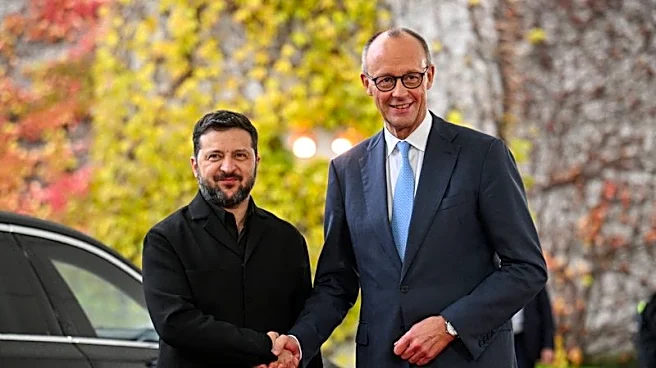
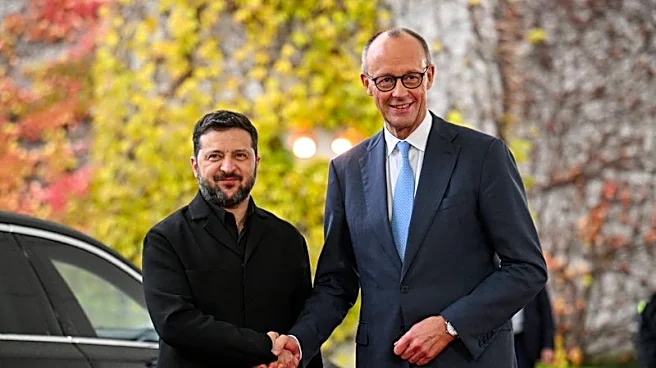
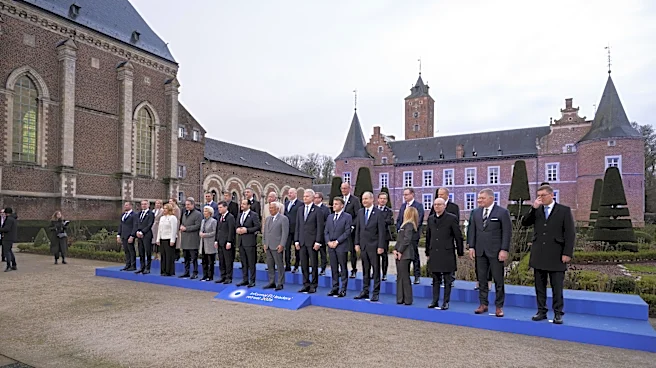
European leaders from Germany, France, and the United Kingdom, alongside Ukraine, issued a joint statement following a meeting in Berlin on November 19. The statement outlines principles for peace negotiations, reaffirms substantial support for Kyiv,
and calls on Russia to agree to an energy truce for the winter. Key agreements include a commitment from NATO countries to provide €70 billion in military aid, equipment, and training by 2026, with comparable support expected in 2027. Additionally, €90 billion is earmarked by the end of 2027 under the European Ukraine Support Loan mechanism for Ukraine's military and financial needs. Strengthening Ukrainian air defense, particularly systems capable of intercepting ballistic missiles, was identified as a priority, with partners increasing efforts to find additional missile defense systems before winter. The leaders also condemned Russian strikes on civilian infrastructure and called for increased economic pressure on Moscow through sanctions targeting oil and gas revenues, cryptocurrency operations, and the military-industrial complex.
Why It's Important?
This joint statement signifies a unified European front in supporting Ukraine and pressuring Russia, with significant financial and military commitments. The €160 billion in aid underscores the long-term dedication to Ukraine's defense and economic stability, which is crucial for maintaining its sovereignty and resisting Russian aggression. The focus on strengthening air defense is particularly vital as winter approaches, aiming to protect Ukrainian cities and infrastructure from continued Russian attacks. The call for an energy truce and a broader cessation of hostilities reflects a strategic effort to de-escalate the conflict and potentially open avenues for peace, while also addressing humanitarian concerns. The emphasis on legally binding security guarantees for Ukraine post-ceasefire, with U.S. support, highlights a commitment to preventing future aggression and ensuring regional stability. The continued sanctions and efforts to combat Russia's shadow fleet aim to cripple its war economy, impacting its ability to sustain the conflict.
What's Next?
Following this joint statement, efforts will intensify to implement the agreed-upon support mechanisms. NATO countries are expected to continue providing military aid and training, with the €70 billion commitment serving as a benchmark for future assistance. The European Ukraine Support Loan mechanism will likely begin disbursing the €90 billion to address Ukraine's financial and military requirements. The search for additional missile defense systems will be a priority, especially as winter progresses. Further economic pressure on Russia is anticipated, with new sanctions targeting its revenue streams and military-industrial complex. The call for an energy truce will test Russia's willingness to de-escalate, and its response will dictate potential next steps in peace negotiations. The Koalicja-2026 exercises in Poland demonstrate ongoing readiness for international force deployment, suggesting continued military preparedness and cooperation among allies.
Beyond the Headlines
The joint statement's emphasis on legally binding security guarantees for Ukraine, with U.S. support, points to a potential reshaping of European security architecture. This commitment goes beyond immediate military aid, aiming to establish a robust framework that deters future aggression and ensures Ukraine's long-term stability. The proposed Multinational Force—Ukraine, operating under European leadership with U.S. backing, could represent a significant shift in international peacekeeping and military cooperation. The continued blocking of frozen Russian assets until Moscow compensates Ukraine for damages introduces a precedent for accountability in international conflicts, potentially influencing future reparations and justice mechanisms. The call for an energy truce, while seemingly humanitarian, also carries strategic implications, as it could be a precursor to broader diplomatic engagements and a test of Russia's willingness to engage in meaningful peace talks. This collective action underscores a growing international consensus on the need to uphold international law and protect sovereign nations from aggression.