






What's Happening?
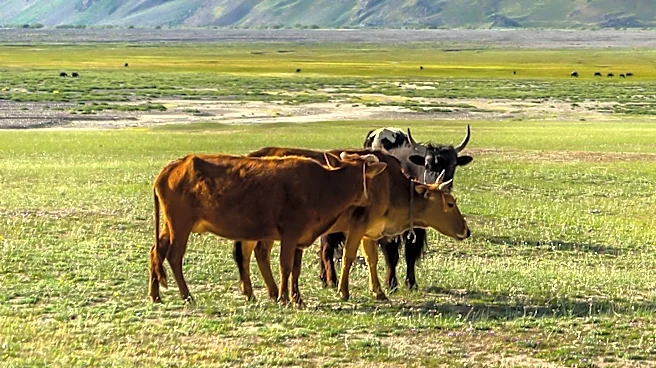
The Food and Agriculture Organization (FAO) of the United Nations has approved a Global Plan of Action for Sustainable Livestock Transformation. This framework aims to address the economic, social, and environmental challenges associated with the livestock
sector. The plan focuses on four priority areas: food security, better livelihoods, animal health, and natural resource use. The livestock sector, a significant source of protein and income for millions, faces scrutiny due to its environmental impact, including greenhouse gas emissions and biodiversity loss. The plan is voluntary and encourages countries to develop national strategies to enhance sustainability in livestock production.
Why It's Important?
The approval of this plan is crucial as it addresses the growing environmental concerns linked to livestock farming, which is a major contributor to greenhouse gas emissions and biodiversity loss. By promoting sustainable practices, the plan aims to mitigate these impacts while supporting economic growth and food security. This initiative could lead to significant changes in how livestock is raised globally, potentially influencing policies and practices in the U.S. and other countries. Stakeholders in the agriculture and environmental sectors stand to benefit from the plan's emphasis on sustainability and resource management.
What's Next?
Countries are encouraged to adapt the Global Plan of Action to their specific contexts, developing national plans to implement sustainable livestock practices. The FAO will support these efforts by assisting in the development of national or regional action plans. The plan's implementation will be periodically reviewed to ensure progress and make necessary adjustments. This ongoing process will require collaboration among governments, industry stakeholders, and environmental groups to achieve the plan's objectives.