










What's Happening?
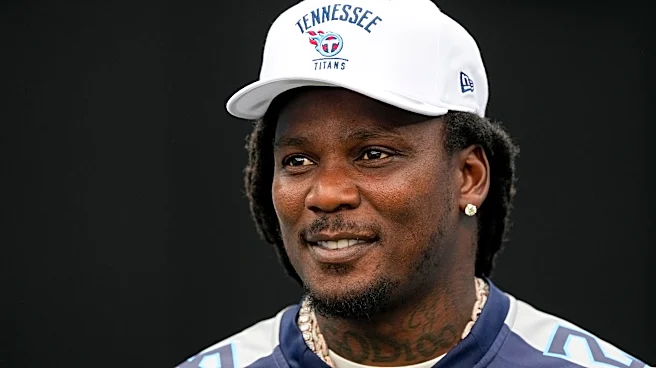
Former NFL running back Chris Johnson has been diagnosed with ALS, also known as Lou Gehrig's disease. In response to his diagnosis, Johnson is reviving the Ice Bucket Challenge, a viral campaign that originally gained popularity in 2014. The challenge
involves participants dumping a bucket of ice water over their heads to raise awareness and funds for ALS research. Johnson's initiative was inspired by Hunter Mecum, a former Utah basketball player, who completed the challenge in Johnson's honor. Johnson has called on 2,000 active NFL players to participate, referencing his own 2,000-yard rushing season. He has also nominated former NFL players LenDale White, Marshawn Lynch, and Adam 'Pacman' Jones to take part. As of now, Johnson's campaign has raised over $33,000 for the Massachusetts General Hospital's Sean M. Healey & AMG Center for ALS.
Why It's Important?
The revival of the Ice Bucket Challenge by Chris Johnson is significant as it brings renewed attention to ALS, a progressive neurodegenerative disease with no known cure. The original challenge in 2014 raised $115 million for the ALS Association, significantly contributing to research and patient care. Johnson's efforts could potentially lead to increased funding and awareness, which are crucial for advancing research and developing treatments. The involvement of high-profile athletes and celebrities can amplify the campaign's reach, encouraging more people to participate and donate. This initiative not only supports those affected by ALS but also highlights the ongoing need for medical research and public engagement in health-related causes.
What's Next?
As the Ice Bucket Challenge gains momentum, more athletes and public figures are expected to join the campaign, further increasing its visibility and impact. The funds raised will likely be directed towards research initiatives and support services for ALS patients. Additionally, the campaign may inspire similar movements for other diseases, demonstrating the power of social media and community involvement in addressing health challenges. Stakeholders such as healthcare organizations, research institutions, and patient advocacy groups may collaborate to maximize the campaign's effectiveness and ensure that the funds are used efficiently.