
What's Happening?
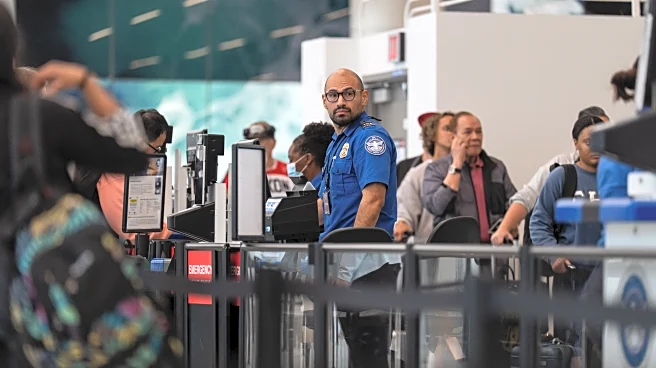
President Trump has issued an order to pay Transportation Security Administration (TSA) agents using existing Homeland Security funds, following weeks of chaos at airports due to unpaid TSA workers. This decision comes amid a federal funding fight that
has led to a nearly 60-day shutdown, causing significant disruptions in air travel. The order aims to alleviate the long wait times and staffing shortages that have plagued airports, particularly during the busy spring break travel period. Despite this temporary measure, there is no immediate resolution from Congress to address the underlying funding issues, as lawmakers have left for a two-week recess without reaching a permanent solution.
Why It's Important?
The decision to pay TSA agents is crucial in restoring normalcy to the U.S. air travel system, which has been severely impacted by the shutdown. The lack of pay had led to a significant number of TSA agents quitting or missing work, exacerbating security line delays and causing frustration among travelers. By ensuring TSA agents receive their paychecks, the administration aims to stabilize airport operations and improve security efficiency. However, the ongoing funding dispute highlights the challenges in reaching bipartisan agreements on federal budget allocations, particularly concerning Homeland Security and immigration enforcement funding.
What's Next?
The temporary payment to TSA agents is a stopgap measure, and a long-term solution requires congressional action. The Senate has passed a bill to fund the Department of Homeland Security, excluding Immigration and Customs Enforcement (ICE) funding, which remains a contentious issue. The House has proposed its own version of funding, leading to a legislative impasse. As Congress reconvenes after the recess, negotiations will need to address these differences to prevent further disruptions. The outcome of these discussions will have significant implications for federal employees, airport operations, and national security.