




What's Happening?
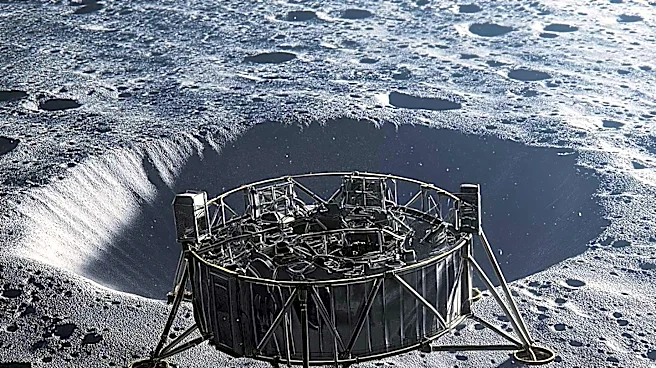
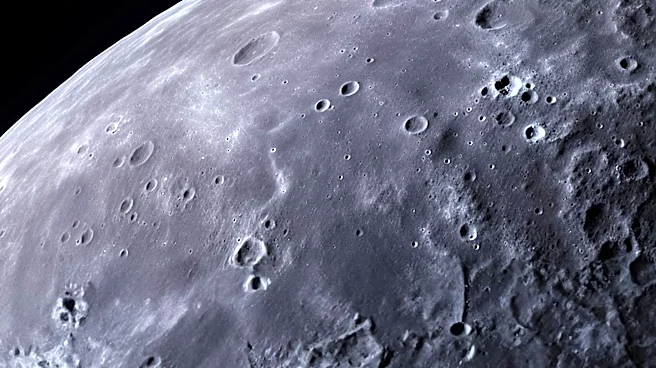
NASA is advancing its EARENDIL project, which focuses on improving astronaut safety during lunar exploration. The initiative addresses the challenges posed by the extreme cold of permanently shadowed regions (PSRs) and the two-week lunar night on the Moon.
EARENDIL proposes integrating compact americium-241 radioisotope heat sources into extravehicular activity (EVA) suits, providing astronauts with continuous warmth during extended surface operations. This innovation aims to extend the operational range and duration of EVAs, enhance crew safety during habitat power failures, and reduce reliance on heavy battery systems. The project aligns with NASA's Space Technology Mission Directorate and Exploration Systems Development Mission Directorate priorities, supporting the Artemis program's long-term objectives at the lunar south pole.
Why It's Important?
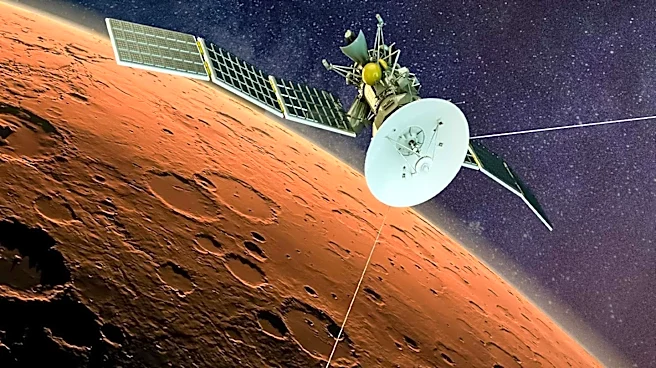
The EARENDIL project is crucial for the future of lunar exploration, as it addresses significant thermal management challenges that limit mission flexibility and endanger astronaut safety. By providing a reliable heat source within EVA suits, the project enhances the feasibility of sustained human operations on the Moon. This capability is vital for NASA's broader ambitions of establishing sustainable exploration architectures on the Moon and Mars. The successful implementation of EARENDIL could redefine thermal management in human spaceflight, offering a mass- and power-efficient solution to one of the harshest constraints on lunar exploration. It also advances the integration of nuclear technologies into astronaut systems, informing future designs for resilience and human survival in extreme extraterrestrial environments.
What's Next?
If the EARENDIL project proves feasible, it could lead to significant advancements in thermal management for human spaceflight. The project's success would support NASA's Artemis program and its goals for a sustainable lunar presence. Additionally, the integration of radioisotope heat sources into EVA suits could inform future designs for Mars exploration and other extraterrestrial missions. The project's outcomes may also influence the development of new technologies for resilience and redundancy in space exploration, potentially impacting future NASA missions and international collaborations.