


What's Happening?
Gordon S. Wood, a prominent historian known for his influential works on the American Revolution, has passed away at the age of 92. Wood, a professor emeritus at Brown University, died after being struck by a car in a supermarket parking lot in East Providence,
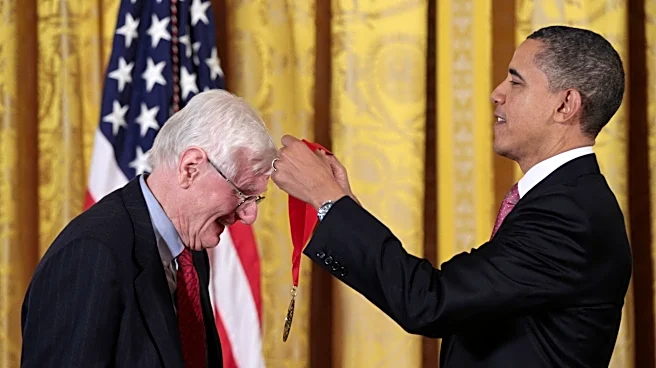
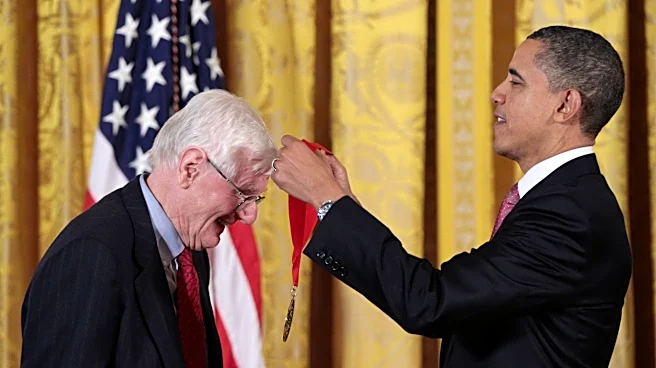
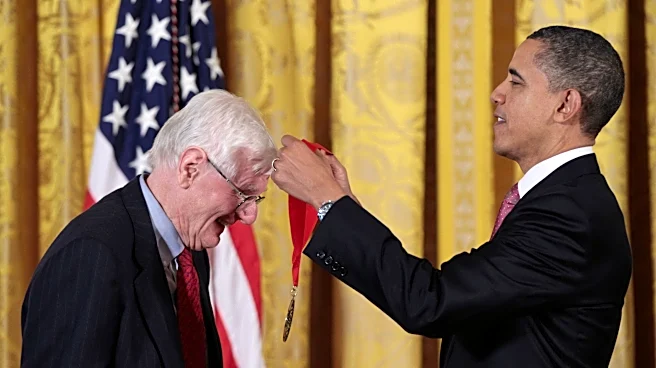
Rhode Island. His scholarly contributions include 'The Creation of the American Republic' and 'The Radicalism of the American Revolution,' the latter of which earned him a Pulitzer Prize. Wood's work has been a cornerstone in the study of America's early years, providing a narrative that has been both celebrated and debated. He was awarded the National Humanities Medal by President Obama in 2011 for his contributions to understanding the nation's founding.
Why It's Important?
Gordon S. Wood's death marks the loss of a significant figure in American historical scholarship. His work has shaped the understanding of the American Revolution and its impact on the formation of the United States. Wood's interpretations have influenced both academic circles and public discourse, making his findings a standard reference in discussions about the nation's early history. His approach to history, which balanced traditional narratives with emerging egalitarian perspectives, has been both praised and critiqued, reflecting the ongoing dialogue about how history is interpreted and taught. His passing may prompt renewed interest and debate over his contributions and the narratives he helped shape.
What's Next?
In the wake of Wood's passing, there may be a resurgence in the study and discussion of his works, as scholars and students revisit his contributions to American history. His death could also inspire new scholarship that builds on or challenges his interpretations, particularly in light of contemporary debates about historical narratives and inclusivity. Institutions like Brown University and the National Constitution Center, where Wood had significant influence, may hold commemorative events or publish retrospectives on his work.
Beyond the Headlines
Wood's legacy extends beyond his published works; he was a mentor to many in the field of history, influencing generations of historians. His critiques of projects like The New York Times' 1619 Project highlight ongoing tensions in historical scholarship about how America's past is understood and taught. Wood's emphasis on understanding history without moral judgment continues to resonate in debates about 'presentism' and the role of historians in society.