


What's Happening?
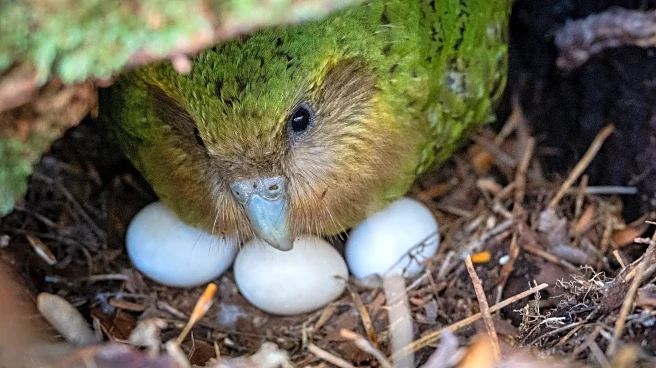
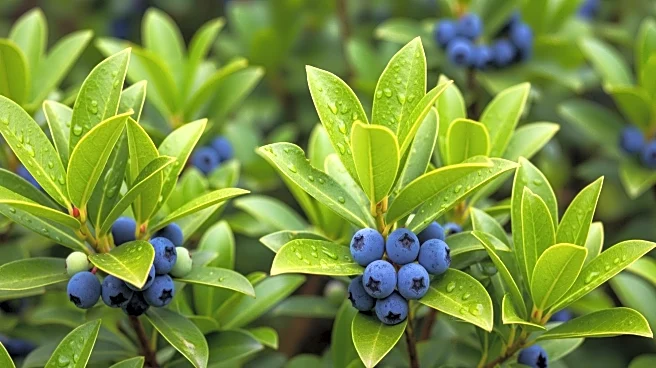
The kakapo, a flightless parrot native to New Zealand, is experiencing a population boost due to a bumper crop of its favorite berries. Conservation efforts have increased the kakapo population from 50 to over 200 in three decades. This year, the abundance
of berries has led to a rare enthusiasm for mating among the birds, potentially resulting in a record number of chicks. The kakapo, which lives on remote islands off New Zealand's southern coast, is critically endangered. Conservationists have been managing the birds' breeding to maintain genetic diversity, and a livestream of a kakapo nest has gained internet attention.
Why It's Important?
The increase in the kakapo population is significant for biodiversity and conservation efforts. The kakapo is a unique species with no flight capability, making it vulnerable to predators introduced by humans. The success of the conservation program highlights the importance of human intervention in preserving endangered species. The kakapo's survival is a testament to the dedication of conservationists and the potential for similar efforts to save other endangered species. The bird's recovery also serves as a symbol of national pride for New Zealand, where native birds hold cultural significance.
What's Next?
Conservationists will continue to monitor the kakapo population closely, ensuring that genetic diversity is maintained. The success of this breeding season could lead to further conservation strategies being implemented for other endangered species. The ongoing management of the kakapo's habitat and breeding practices will be crucial in preventing future declines. Additionally, the public interest generated by the livestream may lead to increased awareness and support for conservation efforts.