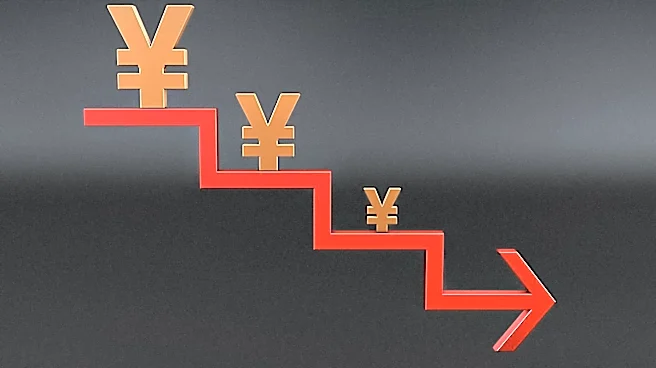








What's Happening?
The United States and Japan have engaged in a rare joint currency intervention to support the Japanese yen, which had fallen to a 40-year low against the U.S. dollar. This move underscores the dollar's continued dominance as a global reserve currency.
The intervention involved coordinated actions to stabilize the yen's exchange rate, which had dropped to 164 yen per dollar before recovering to around 158 yen. The intervention has sparked discussions about the dollar's role in international finance, with analysts noting its unmatched liquidity and depth in global markets.
Why It's Important?
The joint intervention by the U.S. and Japan highlights the strategic importance of currency stability in global economic relations. The dollar's dominance as a reserve currency allows it to play a pivotal role in such interventions, providing stability during market volatility. This event also reflects the challenges faced by other currencies in maintaining value against the dollar, which can impact international trade and economic policies. The intervention may influence future monetary policy decisions and international financial cooperation, as countries navigate the complexities of currency management in a volatile economic environment.