



What's Happening?
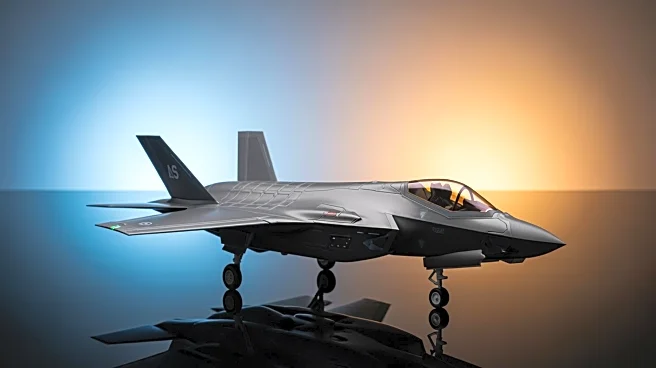
The relationship between U.S. President Donald Trump and Turkish President Recep Tayyip Erdogan is fostering renewed discussions about Turkey's potential re-entry into the F-35 fighter jet program. Turkey was previously removed from the program after
purchasing the Russian S-400 missile defense system, which raised concerns about data security regarding the F-35's capabilities. Ambassador Tom Barrack highlighted that the positive rapport between the two leaders has led to the most productive conversations on this issue in nearly a decade. Turkey, having invested $1.4 billion in the program before its suspension in 2019, is eager to rejoin. The U.S. had also imposed sanctions on Turkey under the Countering America’s Adversaries Through Sanctions Act. Despite its exclusion, Turkey has been exploring other options to enhance its air force, including Eurofighter Typhoons and U.S.-made F-16s, while developing its own KAAN fighter jet.
Why It's Important?
The potential re-admittance of Turkey into the F-35 program could significantly impact U.S.-Turkey relations and NATO dynamics. For the U.S., resolving this issue could strengthen ties with a key NATO ally, potentially influencing Turkey's military alignment and reducing its reliance on Russian defense systems. For Turkey, rejoining the program would enhance its military capabilities and reaffirm its strategic partnership with the U.S. This development could also affect regional security dynamics, particularly in the context of Turkey's relationships with Russia and other NATO members. The outcome of these talks could set a precedent for how the U.S. manages defense partnerships with countries that have complex geopolitical ties.
What's Next?
Ongoing discussions between the U.S. and Turkey are expected to continue, with hopes of reaching a breakthrough that satisfies both nations' security requirements. The U.S. may consider lifting the ban on F-35 sales to Turkey, contingent on resolving concerns about the S-400 system. The outcome of these negotiations could influence future U.S. defense policy and its approach to international military collaborations. Stakeholders, including NATO allies and defense contractors, will be closely monitoring these developments, as they could have broader implications for defense procurement and international relations.