








What's Happening?
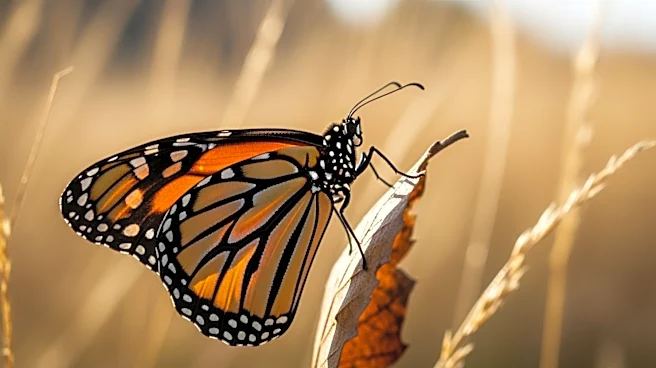
The first monarch butterfly of the year has been sighted in Michigan, marking the beginning of the species' annual northern migration. According to the Journey North Program, the initial sighting occurred on April 23 in St. Clair Shores. This migration is a part
of a larger pattern where the eastern population of North America's monarchs overwinters in central Mexico from October to late March before heading north. Despite not being listed as endangered under the U.S. Endangered Species Act, monarchs were proposed for inclusion in 2024 due to their declining numbers, which continue to pose a risk of extinction. The Journey North Program encourages public participation in community science by reporting sightings of monarchs and other migratory species.
Why It's Important?
The migration of monarch butterflies is a critical ecological event, highlighting broader environmental issues. Monarchs play a vital role in pollination, and their declining numbers could have significant impacts on ecosystems. The proposal to list them as endangered underscores the urgency of conservation efforts. The public's involvement in community science initiatives like Journey North is crucial for tracking these migrations and understanding the factors affecting monarch populations. Planting milkweed, the sole food source for monarch caterpillars, is one way communities can support these butterflies. The migration also serves as an indicator of broader environmental health, reflecting changes in climate and habitat conditions.
What's Next?
As the migration progresses, more monarchs are expected to arrive in Michigan and other northern states. Conservationists and scientists will continue to monitor their numbers and migration patterns. Public engagement through community science will remain essential in gathering data and raising awareness about the challenges facing monarchs. Efforts to plant milkweed and advocate for butterfly-friendly practices will be crucial in supporting their populations. The ongoing discussion about their potential endangered status may lead to increased conservation measures and policy changes aimed at protecting these and other pollinators.
Beyond the Headlines
The monarch migration highlights the interconnectedness of ecosystems and the impact of human activities on wildlife. The decline in monarch populations is partly attributed to habitat loss, climate change, and pesticide use. This situation raises ethical questions about environmental stewardship and the responsibility to protect biodiversity. Long-term shifts in agricultural practices and urban development could further threaten monarch habitats. The migration also serves as a cultural symbol of resilience and transformation, inspiring educational and conservation efforts across the country.