



What's Happening?
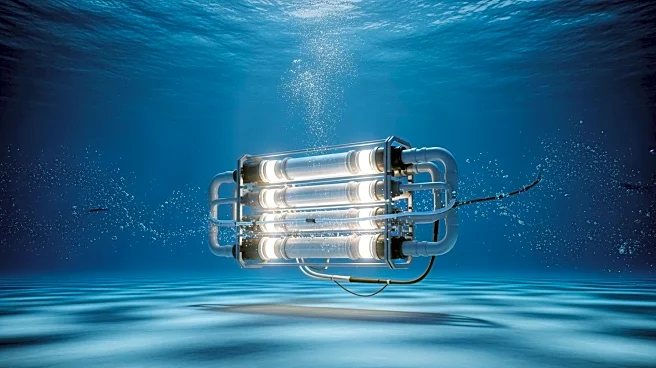
In response to climate change and increasing water scarcity, a company in Southern California is developing a new approach to desalination by moving the technology deep below the ocean's surface. OceanWell's planned Water Farm 1 aims to use natural ocean pressure
to power reverse osmosis, a process that filters out salt and impurities from seawater, to produce up to 60 million gallons of freshwater daily. This method is expected to cut energy use by about 40% compared to conventional desalination plants. The initiative comes as regions worldwide, particularly in arid areas, are increasingly turning to the sea for drinking water due to intensified droughts and disrupted rainfall patterns. OceanWell's approach also seeks to mitigate environmental impacts associated with traditional desalination, such as brine discharge and marine life disruption.
Why It's Important?
The development of more efficient and environmentally friendly desalination technology is crucial as climate change exacerbates water scarcity issues globally. Desalination is becoming a vital solution for regions lacking sufficient freshwater resources. However, traditional methods are energy-intensive and can harm marine ecosystems. OceanWell's deep-sea approach could offer a more sustainable alternative, potentially reducing carbon emissions and minimizing ecological damage. This innovation is particularly significant for areas like Southern California, where droughts and wildfires have strained water supplies. If successful, this technology could be a model for other regions facing similar challenges, contributing to global efforts to secure reliable water sources in the face of climate change.
What's Next?
OceanWell plans to test its system in Nice, France, another region facing water scarcity due to climate change. The success of these trials will be critical in determining the feasibility and cost-effectiveness of the technology. If proven viable, the technology could be deployed more widely, offering a new tool in the global effort to address water shortages. Additionally, the company is working on partnerships to integrate wastewater reuse projects, further enhancing water sustainability. The outcome of these initiatives will likely influence future investments and regulatory decisions in the desalination industry.
Beyond the Headlines
The shift towards underwater desalination highlights the broader trend of seeking innovative solutions to environmental challenges. This approach not only addresses immediate water scarcity but also reflects a growing recognition of the need to balance technological advancement with ecological preservation. The project's success could spur further research and development in sustainable water technologies, potentially leading to breakthroughs in other areas of environmental management. Moreover, it underscores the importance of interdisciplinary collaboration in tackling complex global issues like climate change.