
What's Happening?
The ultra-Orthodox Jewish community in Israel, known as Haredim, is experiencing significant growth in both population and political influence, leading to increased tensions over their exemption from military service. This issue has become particularly
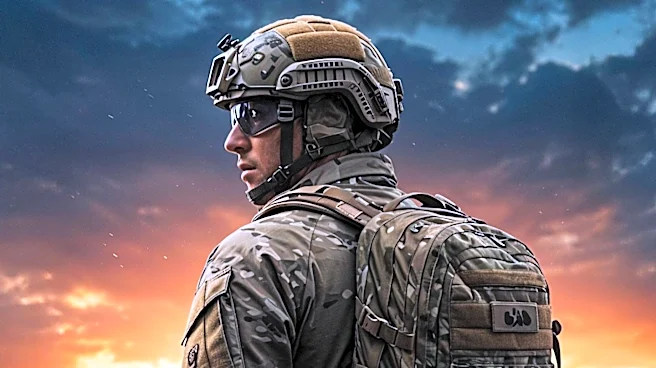
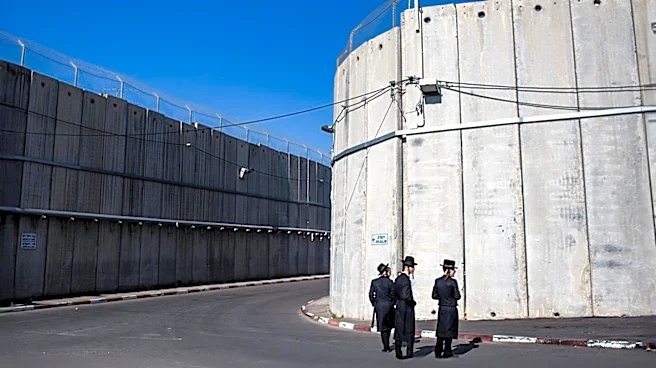
contentious as Israel faces ongoing conflicts and approaches national elections. The core of ultra-Orthodox belief centers on the study of scripture, which they consider their highest duty, often prioritizing it over military service or secular employment. While other Jewish men in Israel are required to serve nearly three years in the military and women two years, fewer than 10% of ultra-Orthodox men enlist. This exemption, initially granted to a small number of scholars after the state's founding to help rebuild Jewish learning post-Holocaust, has expanded over time. The community's distinct lifestyle, with men typically in black suits and hats and women in modest attire, is a visible part of Israeli life. Despite the general exemption, some ultra-Orthodox individuals, like Judith Rosenblum's sons, have chosen to serve, especially following events like the October 7, 2023, Hamas attack.
Why It's Important?
The growing demographic and political power of the ultra-Orthodox community has profound implications for Israeli society, economy, and national security. Their exemption from military service places a disproportionate burden on other Israeli citizens, who are required to serve. This disparity is exacerbated by the ongoing conflicts, where the military is asking for 'unprecedented sacrifice' from its troops. Economically, the emphasis on full-time Torah study for men means a significant portion of the ultra-Orthodox community is outside the workforce, raising concerns about welfare and tax impacts. The Israel Democracy Institute estimates that by 2050, ultra-Orthodox individuals could constitute 25% of the population and 40% of the potential army draft, further intensifying these issues. The debate highlights a fundamental clash between religious values and civic duties, with many Israelis questioning who bears the cost of these choices. The ultra-Orthodox community's political influence also means their parties are likely to be 'kingmakers' in future elections, giving them leverage to maintain their current status.
What's Next?
The debate surrounding the military draft exemption for ultra-Orthodox men is expected to intensify, especially with upcoming national elections where ultra-Orthodox parties will play a crucial role. Recent legislative efforts to protect ultra-Orthodox individuals from draft evasion prosecution have already drawn strong criticism from military leaders, who deem such exemptions 'inconceivable' during wartime. This suggests continued pressure from various sectors of Israeli society to address the issue. The ultra-Orthodox community, however, remains largely steadfast in its belief that Torah study is a spiritual protection and a divine obligation, making any significant change to the exemption a complex and highly sensitive political challenge. Future policy decisions will likely involve attempts to balance the religious freedoms of the ultra-Orthodox with the civic responsibilities and security needs of the broader Israeli population, potentially leading to further protests and political maneuvering.
Beyond the Headlines
Beyond the immediate political and military implications, the growing influence of the ultra-Orthodox community raises deeper questions about the future identity and social fabric of Israel. The tension between secular and religious Israelis, and even within different branches of Judaism, is being brought to the forefront. The ultra-Orthodox belief that other Jews will either follow their path or 'disappear into the mainstream' underscores a cultural and ideological divide. This situation challenges the concept of shared national responsibility and could lead to increased social fragmentation if not addressed effectively. The long-term sustainability of a system where a significant and growing segment of the population is exempt from core civic duties, particularly military service, while relying on state support, will continue to be a critical ethical and societal concern for Israel.