



What's Happening?
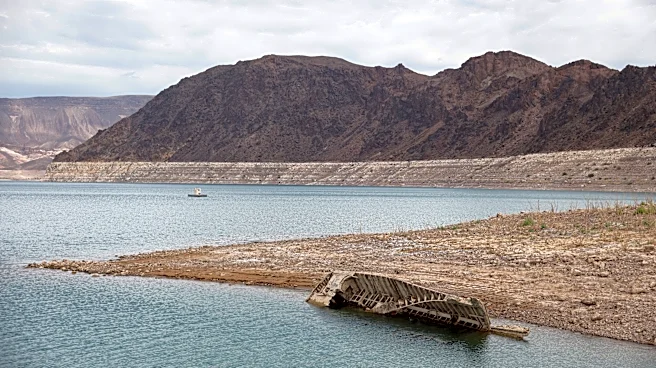
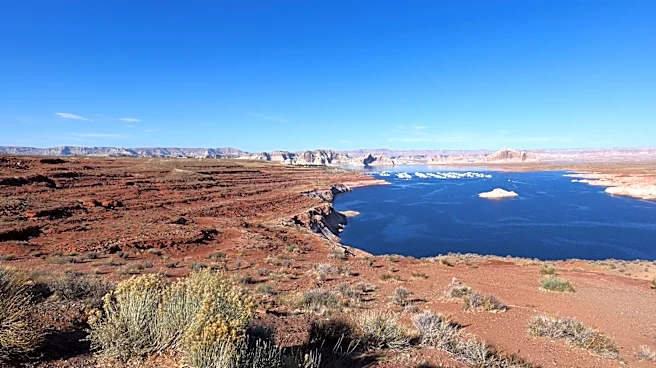
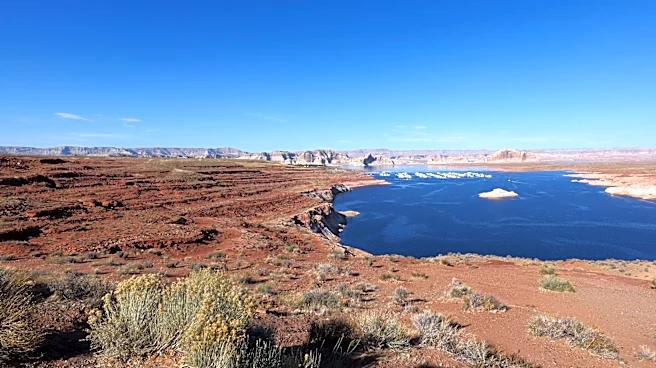
Las Vegas has invested over a billion dollars in infrastructure to ensure its water supply from Lake Mead, even if the lake's levels drop to 'dead pool.' Southern Nevada relies on Lake Mead for nearly 90% of its water. A persistent drought since 2000
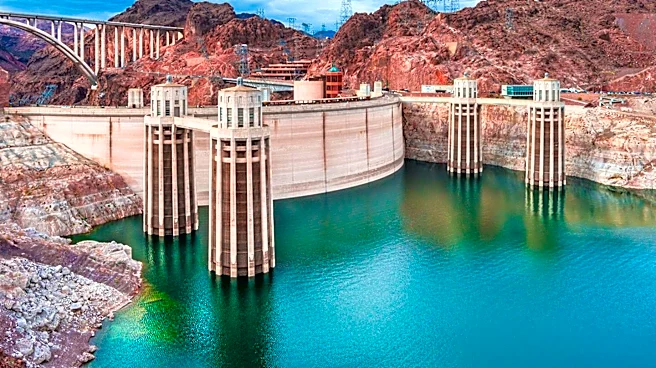
has significantly lowered the lake's water levels. To counter this, the Southern Nevada Water Authority approved and activated Intake No. 3, known as the 'Third Straw,' in 2015. This intake is positioned at 860 feet elevation, 35 feet below the 895-foot dead pool level, allowing water extraction even when the dam can no longer release water downstream. Complementing this, a Low Lake Level Pumping Station, completed in 2020, can lift up to 900 million gallons daily from the lowest intake. These projects, costing approximately $1.5 billion, were funded by local ratepayers.
Why It's Important?
Las Vegas's proactive investment in water infrastructure is critical for its continued viability and economic stability in the face of severe drought conditions affecting the Colorado River Basin. While other states like California, Arizona, and Mexico depend on water releases from Hoover Dam, which would cease at dead pool, Las Vegas's direct pumping capability ensures its access to water. This strategic planning mitigates the immediate threat of the city running dry, providing a crucial buffer against the impacts of climate change and over-allocation of the Colorado River. The city's minimal water allocation and aggressive conservation efforts, including recycling nearly all indoor water, further enhance its water security. This approach serves as a model for other arid regions grappling with water scarcity, demonstrating how significant infrastructure investment and conservation can safeguard urban populations.
What's Next?
While Las Vegas has secured its immediate water access, the long-term sustainability of the Colorado River Basin remains a pressing issue. The 'Third Straw' and pumping station buy time, but do not create new water. The underlying problem of an over-allocated river, exacerbated by megadrought and a warming climate, necessitates a basin-wide solution. The seven Colorado River states, Mexico, and numerous tribes will need to agree on deeper water cuts and new operating rules to replace guidelines expiring in 2026. Negotiations are ongoing to establish a long-term management plan. The future of water supply for the entire region depends on these collaborative efforts to live within the river's actual capacity, rather than relying solely on individual city-level engineering solutions.
Beyond the Headlines
The situation in Las Vegas and the broader Colorado River Basin highlights the complex interplay between urban development, environmental sustainability, and interstate resource management. The city's engineering marvels, while impressive, underscore a deeper ethical and policy challenge: how to equitably share a diminishing natural resource among competing demands. The reliance on technological solutions, while effective in the short term, does not absolve the need for fundamental shifts in water consumption patterns and agricultural practices across the basin. This scenario also brings to light the economic disparities and political complexities involved in water rights, as states and communities vie for access to a shrinking supply. The long-term implications extend to regional stability, economic growth, and the potential for inter-state conflicts over water resources, making the ongoing negotiations for new operating rules critically important.