

What's Happening?
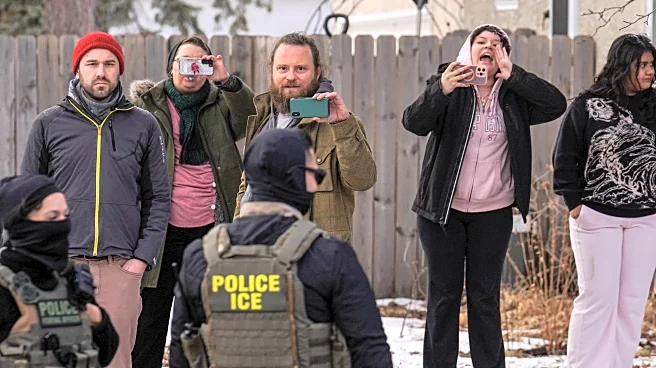
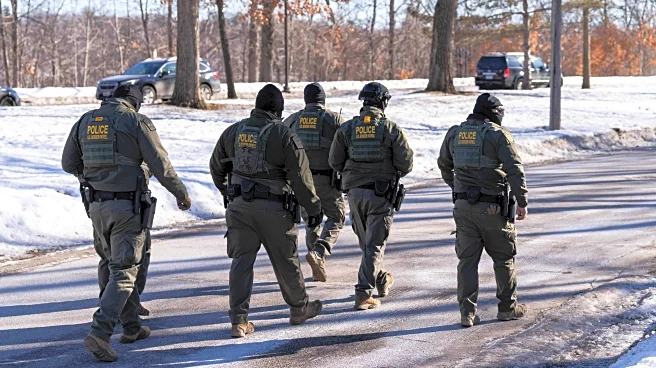
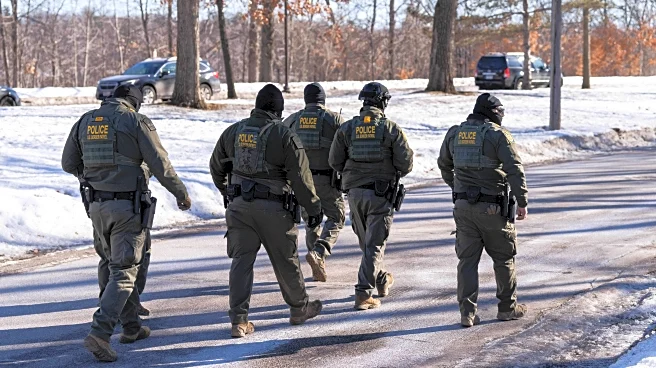
In the Minneapolis suburb of Columbia Heights, public school students have reportedly been targeted by Immigration and Customs Enforcement (ICE) operations. Mary Granlund, the chair of the local school board, has expressed skepticism regarding recent
announcements of an ICE drawdown in the area. Granlund emphasizes the need for greater accountability from the federal government concerning immigration enforcement activities. The situation has sparked discussions about the transparency and oversight of ICE operations, particularly in educational settings where the presence of immigration enforcement can have significant impacts on students and their families.
Why It's Important?
The issue of ICE operations in schools is a contentious topic, as it directly affects the safety and well-being of students, many of whom may be from immigrant families. The presence of ICE in educational environments can create a climate of fear and anxiety, potentially disrupting the learning process and community trust. The call for accountability and transparency from federal agencies is crucial in ensuring that immigration enforcement does not infringe on the rights and safety of students. This situation highlights broader national debates over immigration policy and the role of federal agencies in local communities.
What's Next?
The ongoing debate over ICE's role in schools may lead to increased advocacy for policy changes at both local and national levels. School boards and community leaders might push for clearer guidelines and restrictions on ICE activities in educational settings. Additionally, there could be legal challenges or legislative efforts aimed at protecting students from immigration enforcement actions. The response from federal authorities and potential policy adjustments will be closely monitored by stakeholders, including educators, parents, and civil rights organizations.