






What's Happening?
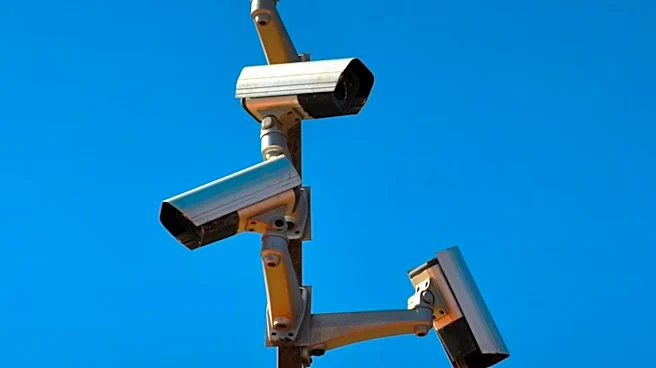
Montgomery County, Maryland, is set to introduce a new traffic enforcement program called 'Speed on Green.' This initiative will upgrade existing red-light cameras to also detect and cite vehicles speeding through green lights. The technology will allow
these cameras to identify speeding violations during the green phase of traffic signals, in addition to their current function of detecting red-light violations. According to Wade Holland, the Vision Zero Coordinator for Montgomery County, the program will operate under the same rules and fine structures as other speed cameras already in place. Drivers will be issued only one citation if both a red-light violation and a speeding violation occur simultaneously. The county plans to install two test 'Speed on Green' cameras at the intersections of Colesville Road and Georgia Avenue, and Colesville Road and University Boulevard by the end of the year. Earl Stoddard, Montgomery County Assistant Chief Administrative Officer, clarified that fines will be issued for drivers exceeding the speed limit by 12 miles per hour or more, with the fine amount graduating based on how much faster the driver is going beyond that threshold. This is a state law change that took effect last year. The 'Speed on Green' cameras will not be installed at all 76 existing red-light camera locations, but rather where it is deemed most effective and legally permissible.
Why It's Important?
The implementation of the 'Speed on Green' program in Montgomery County signifies a significant shift in traffic enforcement strategies, aiming to enhance road safety by targeting speeding at intersections. This initiative could lead to a reduction in traffic accidents and related injuries, as speeding is a major contributing factor to severe collisions. For residents and commuters, this means increased scrutiny of driving habits, potentially leading to more traffic citations and associated costs. The program also highlights the expanding role of automated enforcement technologies in local governance, raising questions about privacy and the balance between public safety and individual liberties. Businesses operating in the county might experience indirect impacts, such as changes in delivery times or increased operational costs if their drivers incur fines. The county's decision to selectively deploy these cameras suggests a data-driven approach to enforcement, focusing on high-risk areas. This could set a precedent for other jurisdictions considering similar expansions of their automated traffic enforcement systems, influencing broader trends in urban traffic management and public safety policy across the U.S.
What's Next?
Montgomery County plans to activate two test 'Speed on Green' cameras at specific intersections by the end of the year. Following this pilot phase, the county will evaluate the effectiveness and legal permissibility of the system before considering broader deployment. Drivers in the designated areas will see new warning signs indicating the presence of these speed-on-green cameras, similar to existing red-light camera signage. The county will continue to assess where these cameras make the most sense for installation, indicating a phased and strategic rollout rather than a blanket implementation across all existing red-light camera locations. Public reaction to the test cameras and any subsequent data on accident reduction or citation rates will likely influence future decisions regarding the program's expansion. Stakeholders, including local residents, advocacy groups, and legal experts, may continue to monitor the program's impact on traffic safety and civil liberties, potentially leading to further public discourse or policy adjustments.
Beyond the Headlines
The 'Speed on Green' program touches upon deeper societal implications regarding the increasing reliance on automated surveillance in public spaces. While framed as a safety measure, the expansion of camera enforcement raises questions about the potential for revenue generation versus genuine accident prevention. The program's success will depend not only on its ability to reduce speeding but also on public acceptance and perceived fairness. There's a subtle shift in the social contract between citizens and law enforcement, where technology increasingly mediates interactions and enforces compliance. This could lead to broader discussions about the role of AI and automated systems in civic life, the ethics of constant monitoring, and the potential for algorithmic bias in enforcement. Furthermore, the program could influence driver behavior beyond the immediate vicinity of the cameras, fostering a more cautious driving culture, or conversely, leading to resentment if perceived as overly punitive. The long-term impact on traffic flow, driver stress, and the overall urban experience will be important to observe.