


What's Happening?
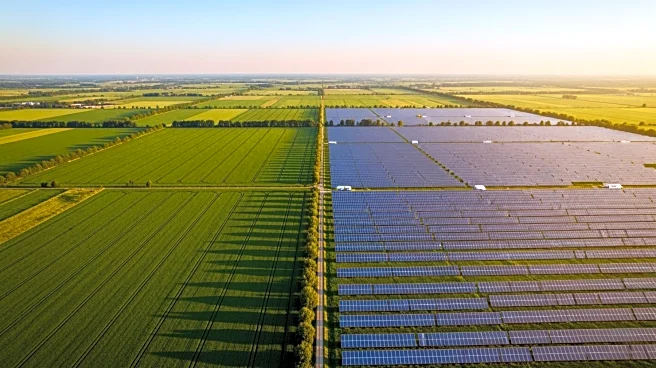
A recent study suggests that photovoltaic (PV) parks in Spain could become more profitable than traditional agriculture within the next 16 to 21 years. According to data from Spain's Ministry of Agriculture, PV parks currently occupy 0.2% of the country's
usable agricultural land. The study, conducted by scientists from Chile and Spain, uses a real options framework to evaluate the transition from crops to solar PV plants, considering factors such as electricity prices and technology costs. The research indicates that the declining costs of PV technology are a significant driver of this potential land-use change. The transition is expected to begin earlier in southern Spain due to higher solar irradiance, with solar energy projected to outperform agriculture in profitability, particularly in these regions.
Why It's Important?
The potential shift from agriculture to solar energy in Spain highlights a significant economic and environmental transition. As PV technology becomes more cost-effective, it could lead to a reduction in agricultural land, impacting food production and rural economies. This shift could also influence energy policies and land-use regulations, as countries balance the need for renewable energy with food security. For farmers, the transition presents both challenges and opportunities, as they may need to adapt to new income sources or face economic pressures from declining agricultural competitiveness. Policymakers will need to consider these factors when designing regulations to ensure a balanced approach to land use.
What's Next?
As the study's findings are published, stakeholders including farmers, policymakers, and energy companies will likely engage in discussions about the implications of increased solar energy deployment. Policymakers may need to adjust regulations to protect high-value agricultural land while promoting renewable energy. Farmers might explore agrivoltaic projects, which combine agriculture and solar energy, as a way to diversify income. The study's insights could also influence investment decisions in the renewable energy sector, as companies assess the profitability of expanding PV installations in Spain.
Beyond the Headlines
The transition from agriculture to solar energy raises ethical and cultural questions about land use and rural livelihoods. The potential displacement of traditional farming practices could affect cultural heritage and community structures in rural areas. Additionally, the environmental impact of large-scale solar installations, such as changes in land biodiversity and water usage, will need to be considered. The study's use of a real options framework highlights the importance of flexibility in decision-making under uncertainty, offering a more nuanced approach to evaluating long-term investments in renewable energy.