
What's Happening?
The United States has officially removed Francesca Albanese, a United Nations expert on Palestinian territories, from its list of sanctioned individuals. This decision follows a recent ruling by a federal
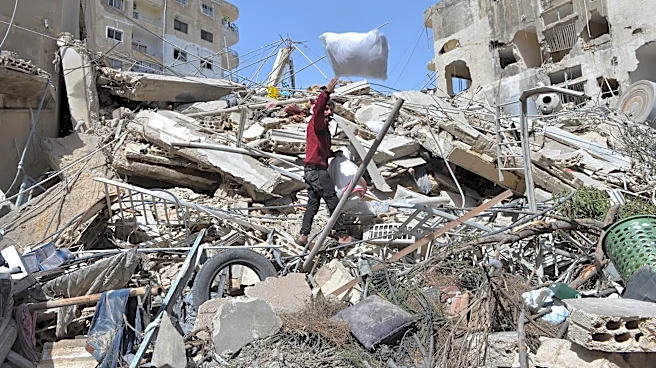
judge who temporarily blocked the sanctions, suggesting that the Trump administration likely infringed upon Albanese's free-speech rights. The sanctions were initially imposed after Albanese criticized Israel's military actions in Gaza, a move that was seen as controversial given the U.S.'s alliance with Israel. The removal of Albanese from the sanctions list marks a significant development in the ongoing discourse surrounding U.S. foreign policy and its implications for international human rights advocacy.
Why It's Important?
This development is significant as it highlights the tension between U.S. foreign policy and international human rights advocacy. The initial sanctions against Albanese were perceived as a suppression of free speech, particularly in the context of criticism against a key U.S. ally, Israel. The federal judge's intervention underscores the importance of protecting free speech rights, even when they involve contentious international issues. This case could set a precedent for how the U.S. handles similar situations in the future, potentially influencing its diplomatic relations and its stance on human rights issues globally. The removal of sanctions may also embolden other international figures to speak out on sensitive topics without fear of retribution.
What's Next?
Following the removal of sanctions, it is likely that there will be increased scrutiny on how the U.S. government applies sanctions in cases involving free speech and international criticism. Human rights organizations and international bodies may push for clearer guidelines to ensure that sanctions are not used as a tool to silence dissent. Additionally, this case may prompt further legal challenges from individuals or groups who feel that their rights have been similarly infringed. The U.S. government may need to reassess its approach to sanctions to balance national interests with the protection of fundamental rights.