


What's Happening?
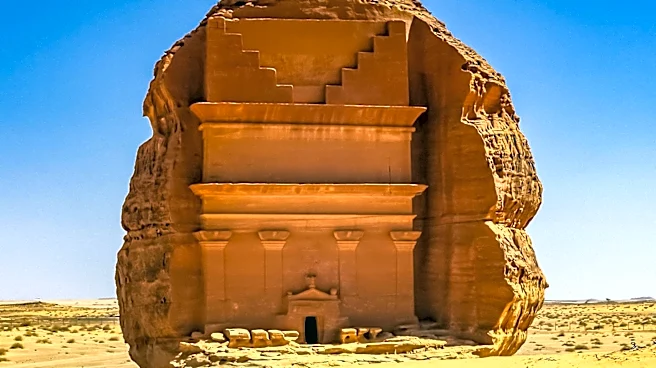
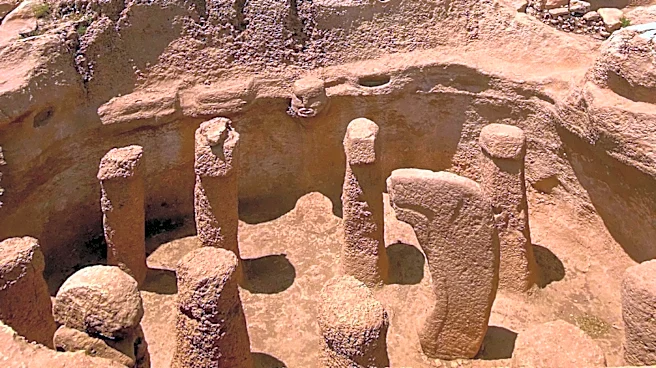
AlUla is recognized for its rich archaeological landscape, particularly the ancient Nabataean city of Hegra, which boasts over 110 well-preserved tombs carved into golden sandstone. The region also encompasses Dadan, the former capital of the Dadanite
and Lihyanite kingdoms, and Jabal Ikmah, often referred to as an 'open-air library' due to its extensive collection of ancient rock inscriptions. Ongoing archaeological work in AlUla aims to meticulously study these historical sites and unearth evidence that can illuminate the development of ancient civilizations in northwestern Arabia. This research is crucial for understanding the historical context and cultural evolution of the region, providing insights into past societies and their interactions.
Why It's Important?
The archaeological endeavors in AlUla are significant for several reasons. They contribute to a deeper understanding of ancient civilizations that flourished in northwestern Arabia, a region that served as a crossroads for trade routes and cultural exchange. The preservation and study of sites like Hegra, Dadan, and Jabal Ikmah offer invaluable data for historians and archaeologists, allowing them to reconstruct the social, economic, and religious lives of their inhabitants. This work not only enriches global historical knowledge but also highlights the unique heritage of the Arabian Peninsula. The findings can influence academic curricula, foster international research collaborations, and potentially boost cultural tourism, bringing economic benefits to the region while promoting a greater appreciation for its historical depth.
What's Next?
The archaeological season for 2026-2027 is expected to continue the excavation efforts at Dadan and other sites within AlUla. These ongoing projects will likely lead to further discoveries and a more comprehensive understanding of the ancient kingdoms that once thrived there. Researchers will continue to analyze artifacts, inscriptions, and architectural remains, integrating these findings with existing historical records. Future plans may include the development of new conservation techniques for the delicate sandstone structures and rock art, as well as educational programs designed to share these discoveries with a wider audience. The long-term goal is to establish AlUla as a leading center for archaeological research and cultural heritage.
Beyond the Headlines
The archaeological work in AlUla extends beyond mere excavation; it delves into the ethical and cultural dimensions of preserving and interpreting ancient heritage. The careful balance between scientific exploration and the protection of fragile historical sites is paramount. The 'open-air library' of Jabal Ikmah, with its ancient rock inscriptions, presents unique challenges in terms of conservation and accessibility, requiring innovative approaches to ensure its longevity. Furthermore, the discoveries contribute to a broader narrative about human civilization, offering insights into early forms of writing, governance, and trade networks. This ongoing research fosters a deeper appreciation for the interconnectedness of ancient cultures and the enduring legacy they leave behind, influencing how modern societies view their own origins and development.