

What's Happening?
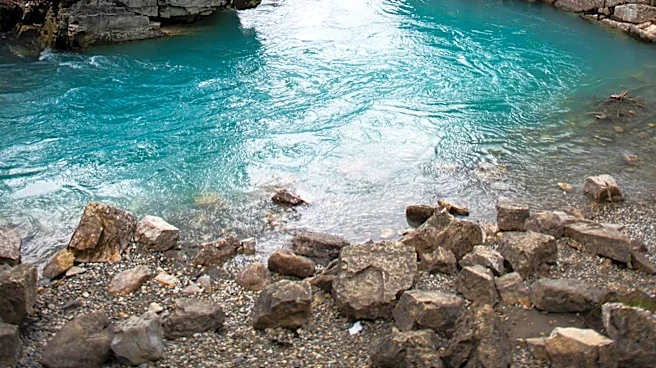
Ken Nurse, a man visiting Glacier National Park in Montana with his family and friends, survived a 120-foot fall into McDonald Creek on August 13. The incident occurred when Nurse moved closer to the edge of an overlook near McDonald Falls to take photos,
and the ground beneath him gave way. He plunged down a cliff and went over a set of waterfalls. A good Samaritan bystander witnessed the fall and immediately entered the creek, finding Nurse lying face down. The bystander pulled Nurse into shallower water and began chest compressions when he realized Nurse was not breathing, actions credited with saving his life. Glacier National Park rangers were attending to Nurse in the creek when the Two Bear Air Rescue helicopter crew arrived. Video footage shows a crew member being lowered from the helicopter to secure Nurse, who was then hoisted from the water and transported to a medical helicopter for further stabilization and hospital transport.
Why It's Important?
This incident highlights the critical role of bystander intervention in emergency situations, particularly in remote or challenging environments like national parks. The quick thinking and courageous actions of the good Samaritan were directly responsible for saving Ken Nurse's life, underscoring the potential impact individuals can have in crises. It also serves as a stark reminder of the inherent dangers present in natural landscapes, even in designated viewing areas, and the importance of exercising extreme caution near cliff edges and powerful waterways. For national parks, this event may prompt further review of safety measures, signage, and visitor education regarding hazardous areas. The successful rescue operation by Two Bear Air Rescue also showcases the vital services provided by specialized search-and-rescue teams in responding to severe accidents in difficult terrain, ensuring that visitors to national parks can receive timely and effective medical attention when emergencies arise.
What's Next?
Ken Nurse spent two days on a ventilator and sustained multiple injuries, including cracked ribs, a compound fracture to his elbow requiring surgery, and fluid in his lungs. He expressed immense gratitude to everyone who assisted in his rescue, acknowledging that he owes them his life. Glacier National Park officials may review the incident to assess if any additional safety warnings or barriers are necessary at the McDonald Falls overlook, though the source does not explicitly state this. The Two Bear Air Rescue team has publicly commended the bystander's life-saving efforts, potentially inspiring others to act in similar emergencies. This event will likely serve as a cautionary tale for visitors to national parks, reinforcing the message to remain vigilant and adhere to safety guidelines when exploring natural attractions, especially near steep drops and water features.
Beyond the Headlines
This event subtly underscores the broader societal value of civic responsibility and the human instinct to help others in distress. The bystander's immediate and effective response, without hesitation, exemplifies a profound sense of community and shared humanity that often emerges in moments of crisis. It also brings to light the often-unseen dedication and expertise of volunteer or specialized rescue organizations like Two Bear Air Rescue, whose readiness and capabilities are crucial for public safety in wilderness areas. The incident could also spark discussions about the balance between providing access to natural beauty and ensuring visitor safety, particularly as national parks experience increasing visitation. It highlights the need for continuous public awareness campaigns about outdoor safety, emphasizing personal responsibility while also acknowledging the unpredictable nature of natural environments. The story serves as a powerful narrative of survival against odds, made possible by the confluence of individual bravery and professional emergency response.