





What's Happening?
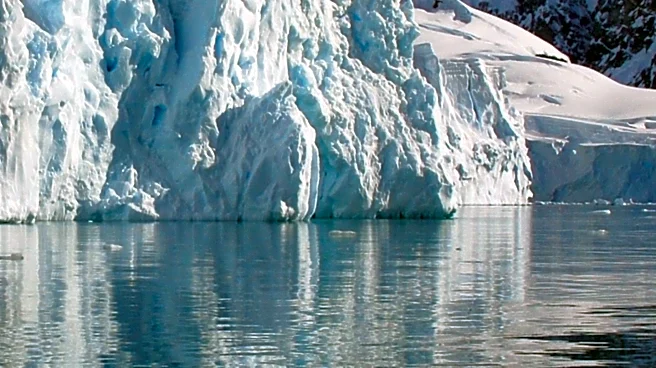
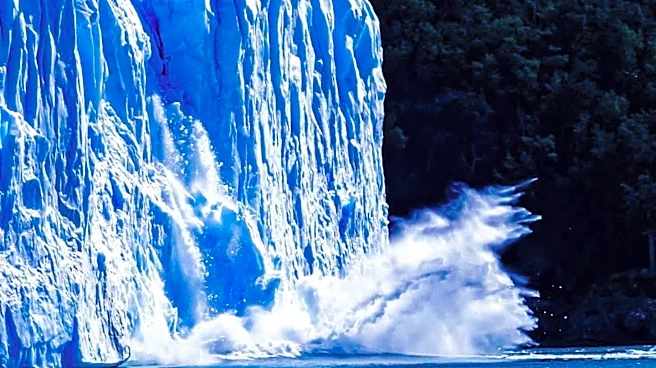
The Thwaites Glacier in West Antarctica, often referred to as the 'doomsday glacier,' is showing signs of potential collapse, which could have significant global consequences. This glacier, the size of Britain, is responsible for 4% of global sea-level
rise. Its eastern ice shelf, which helps stabilize the glacier, is at risk of breaking away, potentially accelerating the glacier's retreat. If Thwaites collapses entirely, it could lead to the collapse of the entire West Antarctic Ice Sheet, raising global sea levels by over 3 meters. The International Thwaites Glacier Collaboration, a U.S.-U.K. research initiative, is studying the glacier to understand the timeline and potential impacts of its collapse. Recent findings indicate that the glacier's destabilization is due to widening cracks rather than melting from below, altering previous scientific understanding.
Why It's Important?
The potential collapse of the Thwaites Glacier poses a significant threat to global coastal regions. A rise in sea levels by more than 3 meters would inundate low-lying areas, displacing millions and reshaping coastlines worldwide. This scenario underscores the urgent need for international research and collaboration to understand and mitigate the impacts of climate change. The findings from the Thwaites Glacier study could inform global climate policy and adaptation strategies, highlighting the interconnectedness of global environmental systems and the need for comprehensive climate action.
What's Next?
Researchers are continuing to study the Thwaites Glacier to refine predictions about its potential collapse. The timeline for the glacier's retreat remains uncertain, with some models suggesting significant changes could occur within the next decade. The research aims to determine whether interventions could slow or prevent the glacier's collapse. The findings will likely influence future climate policies and international efforts to address rising sea levels. As the situation develops, coastal cities worldwide may need to prepare for potential impacts, including infrastructure adaptation and relocation plans.
Beyond the Headlines
The situation with the Thwaites Glacier highlights broader issues related to climate change and environmental policy. The potential collapse of such a significant ice mass raises questions about global responsibility and the need for coordinated international efforts to address climate change. It also emphasizes the importance of scientific research in informing policy decisions and the need for public awareness and engagement in environmental issues. The Thwaites Glacier serves as a stark reminder of the urgent need for action to mitigate the impacts of climate change and protect vulnerable communities worldwide.