




What's Happening?
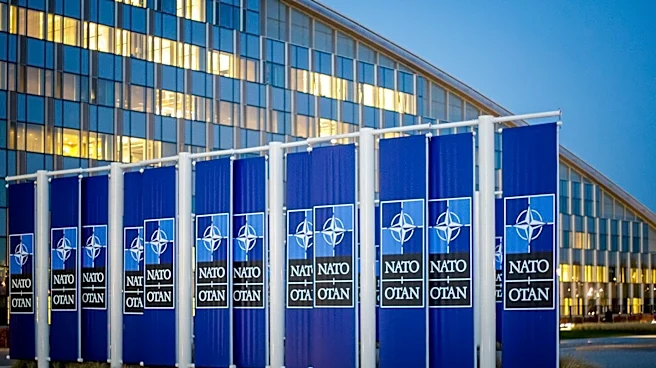
U.S. Secretary of Defense Pete Hegseth has commended Germany for its enhanced commitment to NATO and its efforts to bolster defense production. During a meeting with German Minister of Defense Boris Pistorius at the Pentagon, Hegseth highlighted the significant
progress made by Germany in strengthening NATO, particularly since President Trump's return to office. The two ministers signed a defense agreement aimed at expanding joint development, production, and licensed manufacturing of weapons and ammunition. This cooperation also includes an expansion of maintenance and repair capabilities. Hegseth emphasized that while defense spending is a crucial first step, utilizing Germany's industrial base for collective defense is equally important for a 'NATO 3.0'. This agreement comes after previous criticism from Washington regarding Germany's defense contributions, which have since seen a substantial increase, alongside expanded military aid to Ukraine.
Why It's Important?
This development signifies a strategic shift in U.S.-German defense relations, moving towards deeper industrial integration within NATO. For the U.S., leveraging Germany's industrial capacity helps address the high demand for military systems, especially given the strain on U.S. resources from ongoing conflicts. It also diversifies the supply chain for critical defense assets, potentially reducing reliance on a single source. For Germany, this partnership offers opportunities to access advanced technologies and systems not yet produced in Europe, such as guided missiles and air defense systems like the Patriot. It also positions Germany as a more central player in European defense, contributing to its economic and strategic influence. The increased joint production capacity is vital for replenishing inventories, strengthening capabilities for both American, German, and allied forces, and ensuring maximum combat effectiveness in a complex global security landscape.
What's Next?
The signed defense agreement is expected to lead to concrete initiatives for joint development and production. German industry, with its expertise and capacity, is poised to play a larger role in manufacturing weapons and ammunition for NATO. This could include German companies like Rheinmetall competing for significant U.S. Army contracts, such as the bid for the future infantry fighting vehicle. The expansion of maintenance and repair capabilities will also be a key focus. Furthermore, Germany's continued increase in defense spending and its leadership in providing military aid to Ukraine are likely to solidify its position as a crucial U.S. ally in Europe. The ongoing war in Iran, which has strained U.S. military resources, underscores the urgency and importance of this enhanced transatlantic defense cooperation.
Beyond the Headlines
The deeper collaboration between the U.S. and Germany in defense production extends beyond immediate military needs, hinting at a broader re-evaluation of global defense industrial bases. This move could foster greater interoperability and standardization of military equipment among NATO allies, enhancing collective security. It also highlights a potential shift in the global arms market, with German industry gaining a more prominent role in supplying advanced defense systems. The emphasis on utilizing Germany's industrial base for collective defense could also stimulate technological innovation and economic growth within Germany's defense sector. Furthermore, this partnership could serve as a model for other NATO members, encouraging a more integrated and resilient defense industrial ecosystem across the alliance, ultimately strengthening NATO's overall deterrent capabilities.