



What's Happening?
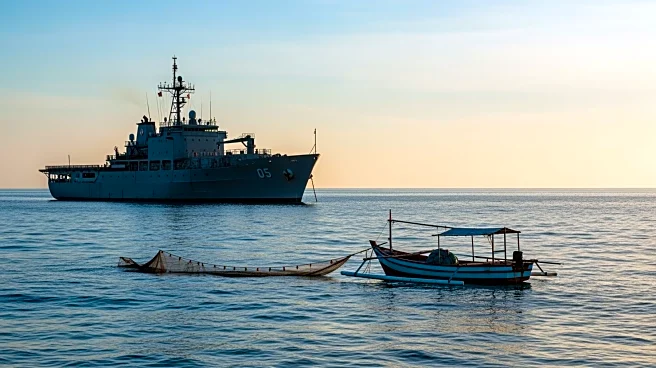
On January 1, 2026, the crew aboard the USNS Cesar Chavez, a Lewis and Clark-class provision ship supporting the U.S. Navy, successfully rescued three Filipino fishermen who had been adrift in the South China Sea for five days. The fishermen were found
clinging to the wreckage of their boat, which had flooded and started to drift on December 28. Upon spotting the distressed vessel, the ship's watch standers immediately notified the bridge, leading to the launch of a rigid-hulled inflatable boat to recover the fishermen. The individuals were brought aboard the Cesar Chavez and evaluated by the ship’s medical staff. Philippine authorities were notified, and arrangements were made to transfer the fishermen to a Philippine Coast Guard vessel for their return home.
Why It's Important?
This rescue operation underscores the importance of international maritime cooperation and the role of the U.S. Navy in humanitarian missions. The successful rescue highlights the capabilities of the USNS Cesar Chavez in conducting logistics and resupply missions while also being prepared for emergency situations. The incident also emphasizes the need for robust safety measures and preparedness in the fishing industry, particularly in regions prone to adverse weather conditions. The cooperation between the U.S. Navy and Philippine authorities demonstrates the strength of bilateral relations and the shared commitment to ensuring the safety of individuals at sea.
What's Next?
Following the rescue, the Philippine Coast Guard is expected to conduct a thorough investigation into the circumstances that led to the fishermen's vessel flooding and drifting. This may lead to recommendations for improved safety protocols for fishing vessels operating in the region. Additionally, the U.S. Navy will continue its routine logistics and resupply missions in support of the U.S. 7th Fleet, maintaining readiness for similar humanitarian operations in the future. The incident may also prompt discussions on enhancing maritime safety and cooperation between the U.S. and the Philippines.
Beyond the Headlines
The rescue operation by the USNS Cesar Chavez not only highlights the ship's logistical capabilities but also brings attention to its historical significance. Named after Cesar Chavez, a civil rights leader and Navy veteran, the ship has been at the center of discussions regarding its naming. The U.S. federal government had considered removing Chavez's name, but protests and lobbying efforts succeeded in preserving it, honoring his legacy. This incident reinforces the ship's symbolic role in promoting humanitarian values and the legacy of its namesake.