






What's Happening?
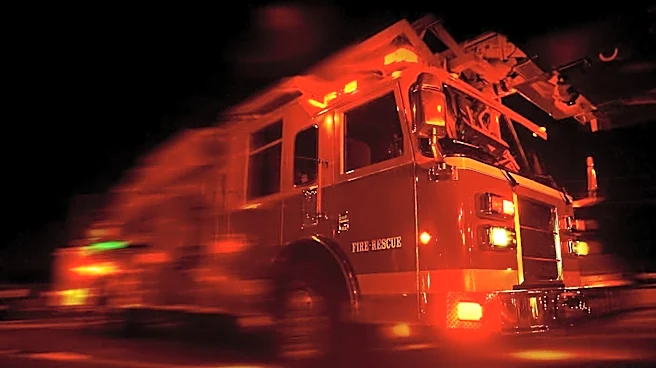
Kirkland House at Harvard University was evacuated on Sunday night following a fire alarm triggered by a malfunctioning steam valve. The Cambridge Fire Department responded to the incident. A significant amount of steam was observed billowing from a ventilation
system located near the temporary kitchen in front of Eliot House, which is currently undergoing renovation. An officer at the scene indicated that steam was escaping at regular intervals from a high-pressure pipe connected to an underground steam room, sending plumes across the Eliot construction site. Responders closed the intersection of South and Dunster Street around 10:15 p.m. Firefighters remained on site for an additional hour, and residents who had stayed in their rooms were evacuated starting at 11:15 p.m. Kirkland Faculty Deans Downing Lu and Peter J. Huybers opened their residence to provide shelter for the evacuated students while the building was being cleared.
Why It's Important?
This incident highlights the potential safety risks associated with aging infrastructure and the importance of prompt emergency response in densely populated institutional settings like university campuses. The malfunction of a high-pressure steam valve could have posed a significant hazard, underscoring the necessity of regular maintenance and immediate action when such issues arise. The evacuation of Kirkland House, a residential building, demonstrates the priority placed on student safety and the coordinated efforts between university administration and local emergency services. The disruption caused by the evacuation, even for a temporary period, can impact student well-being and academic routines, emphasizing the need for efficient and clear communication during such events.
What's Next?
The Cambridge Fire Department concluded its response after clearing the building, allowing residents to eventually return to Kirkland House. University officials will likely conduct a thorough investigation into the steam valve malfunction to determine its cause and implement necessary repairs or upgrades to prevent future occurrences. This incident may prompt a review of maintenance protocols for steam systems and other critical infrastructure across the Harvard campus. The university will also likely assess its emergency communication and evacuation procedures to ensure optimal response in future situations. The temporary kitchen area, where the steam was observed, may also undergo further inspection as part of the ongoing Eliot House renovation project.
Beyond the Headlines
This event subtly points to broader challenges faced by older institutions with extensive and complex infrastructure. Maintaining historical buildings while ensuring modern safety standards often requires significant investment and meticulous planning. The incident also underscores the critical role of campus faculty and staff, such as Deans Lu and Huybers, in providing immediate support and care for students during emergencies, extending beyond their academic roles. Furthermore, the presence of a temporary kitchen due to ongoing renovations suggests the continuous evolution and adaptation of campus facilities, which can introduce new complexities in managing infrastructure and emergency preparedness. This situation serves as a reminder of the constant vigilance required to ensure safety in dynamic and historic environments.