






What's Happening?
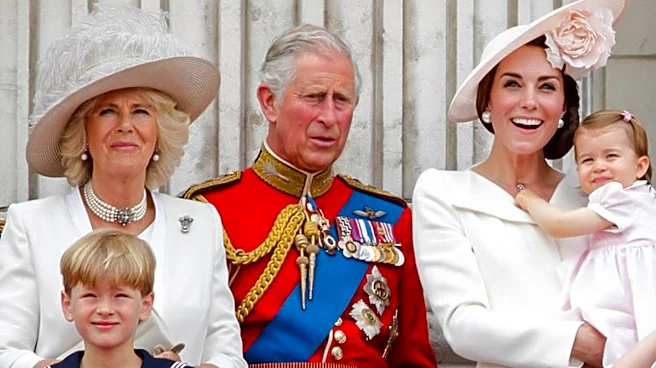
Queen Camilla is described as having a 'magical effect' on King Charles, according to a new book by Catherine Mayer. The couple's relationship, which began in 1970, has been marked by significant public and personal challenges. After initially dating,
their paths diverged when Charles joined the Royal Navy and Camilla married Andrew Parker Bowles. Charles later married Princess Diana. Following Diana's death in 1997, Charles and Camilla made their relationship public, facing scrutiny and efforts to repair their public image. Mayer's book highlights Camilla's supportive role, particularly during stressful times for Charles, noting her ability to uplift him.
Why It's Important?
The relationship between King Charles and Queen Camilla is significant as it underscores the personal dynamics within the British monarchy, which can influence public perception and royal duties. Camilla's role as a stabilizing force for Charles may impact his effectiveness as a monarch, especially during times of stress. The couple's journey from scandal to acceptance reflects broader themes of forgiveness and resilience, potentially affecting public attitudes towards the monarchy. Their story also highlights the evolving nature of royal relationships and the importance of personal support systems in high-pressure roles.
What's Next?
As King Charles continues his reign, the support of Queen Camilla may play a crucial role in his ability to navigate the challenges of modern monarchy. Public and media scrutiny will likely persist, but their established partnership could help mitigate negative perceptions. The monarchy's adaptation to contemporary expectations, including transparency and relatability, may be influenced by their relationship. Future public appearances and engagements will be opportunities to further solidify their image as a united front, potentially shaping the monarchy's legacy.
Beyond the Headlines
The relationship between King Charles and Queen Camilla also raises questions about the intersection of personal and public life in the monarchy. Their story challenges traditional narratives of royal duty and personal happiness, suggesting a shift towards more humanized portrayals of royal figures. This evolution may influence cultural perceptions of leadership and the role of personal relationships in public service. Additionally, their journey from controversy to acceptance could serve as a case study in public relations and image rehabilitation within high-profile institutions.