

What's Happening?
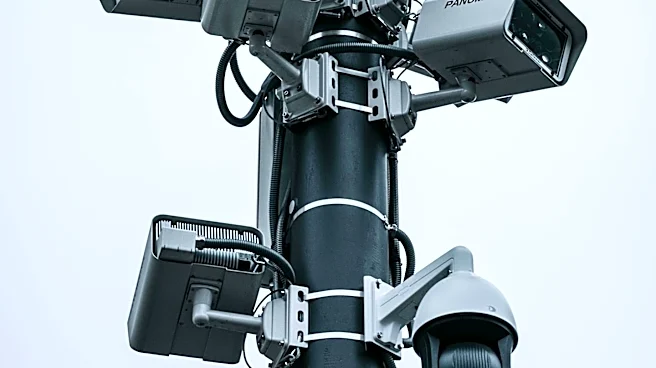
The Scientific Coalition for UAP Studies (SCU), a 501(c)(3) nonprofit research organization, has initiated a $100,000 fundraising campaign. The goal is to develop, construct, and scientifically commission six weatherproof, solar-powered camera stations
designed to autonomously record the night sky for weeks. These stations will be capable of measuring illuminated or self-luminous objects in the atmosphere and low-Earth orbit, up to 1,000 km. When multiple stations record the same object, the system can calculate its three-dimensional position, speed, and acceleration, allowing researchers to determine if the object's motion aligns with known natural phenomena, human technology, or remains unexplained. The project builds on proof-of-concept work by Professor Wesley Andrés Watters of Wellesley College and his team, which demonstrated the ability of two calibrated cameras to detect, track, and triangulate near-Earth objects. Campaign funds will support further development, including improved enclosures, solar charging, remote access, and enhanced camera and timing systems. Robert Powell, an SCU Executive Board Member, emphasized that standardized instruments and published performance data will provide verifiable information to researchers and the public, moving beyond reliance on single photographs and anecdotes.
Why It's Important?
This initiative is significant for several reasons. Firstly, it aims to bring a new level of scientific rigor and objectivity to the study of Unidentified Anomalous Phenomena (UAP). By deploying standardized, open-source camera systems, the project seeks to gather verifiable data that can be independently analyzed, potentially shifting the public discourse from anecdotal evidence to empirical observation. This scientific approach could lead to a better understanding of atmospheric and orbital phenomena, whether they are natural, human-made, or currently unexplainable. Secondly, the open-source nature of the hardware designs and software means that any research group can replicate and utilize the system, fostering broader collaboration and accelerating research in this field. This democratizes access to advanced UAP detection technology, potentially leading to a more comprehensive global monitoring network. Finally, the project's emphasis on transparent data release, following analysis and peer-reviewed publication, aims to build public trust and provide a credible foundation for future discussions and policy decisions regarding UAP.
What's Next?
The project plan includes a field trial in the Massachusetts area scheduled for July 2027. Following this, two completed systems are slated for shipment to New Mexico for fieldwork after September 2027. SCU has committed to providing quarterly project updates to donors throughout 2027. All hardware designs and software developed for the camera stations will be published as open source, enabling other research groups to build and use the same system. Data collected by the stations will be released to the public once the SCU team has analyzed it and published a scientific paper. A generous donor has pledged to match new gifts dollar-for-dollar up to $30,000, with this matching opportunity available until January 1, 2027, aiming to significantly boost the fundraising efforts towards the $100,000 goal.
Beyond the Headlines
The SCU's campaign represents a broader trend towards demystifying UAP through scientific methodology, moving away from speculative narratives. By focusing on open-source technology and transparent data, the initiative challenges the historical secrecy and lack of verifiable information surrounding UAP. This approach could set a new standard for how such phenomena are investigated, potentially influencing government agencies and other scientific bodies to adopt similar transparent and collaborative models. The project also highlights the growing role of citizen science and independent research organizations in addressing questions that have traditionally been confined to classified government programs or fringe communities. The success of this model could pave the way for more publicly accessible and scientifically robust investigations into other unexplained phenomena, fostering a more informed public and potentially leading to unexpected scientific discoveries.