





What's Happening?
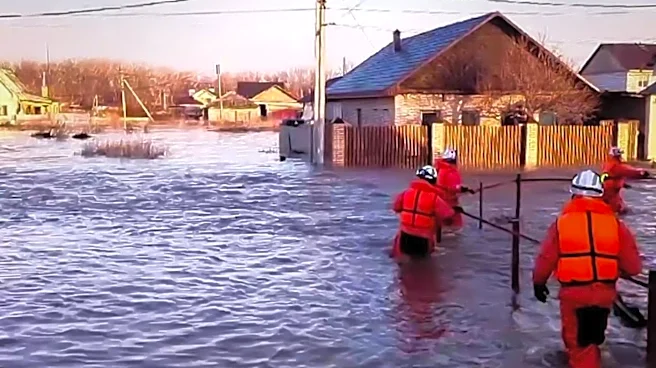
The International Maritime Rescue Federation (IMRF) has published a new 'Flood Rescue Service Implementation Guide' to assist organizations in establishing and enhancing their flood rescue capabilities. This guide addresses the unique challenges of operating
in flooded urban areas and inland waterways, which differ significantly from traditional maritime search and rescue (SAR) operations. Dave Whiddon, Senior International Programme Manager at the Royal National Lifeboat Institution (RNLI), emphasized that effective flood rescue requires specialized skills, dedicated equipment, and robust safety procedures. The guide aims to help organizations understand flood hazards, manage risks, and prepare response teams for operational deployment, stressing that safety is paramount.
Why It's Important?
The release of this guide is crucial as flooding becomes a growing global concern, intensified by climate change. The IMRF's #FutureSAR initiative and 'Tides of Change' report identified flooding as a prominent and increasing challenge for SAR organizations, with sea-level rise, storm surges, and more severe inland and coastal flooding expected to increase demand for rescue services while making operations more difficult. This initiative provides practical support for organizations to adapt to these changing risks, ensuring that rescue teams are adequately prepared and equipped. The guide's emphasis on specialized training and equipment highlights the evolving nature of disaster response and the need for continuous adaptation to new environmental realities.
What's Next?
The IMRF plans to review the guide after three years and welcomes feedback from organizations utilizing its recommendations. Dave Whiddon will present the new guidance at the IMRF Conference in Saint-Malo, France, on November 25–26, 2026, and during the IMRF Forward Look webinar on January 13, 2027. These presentations will further disseminate the guide's key recommendations and practical considerations for developing or strengthening flood rescue capabilities. The ongoing engagement and feedback process will ensure the guide remains relevant and effective in addressing the evolving challenges of flood rescue in a changing climate.
Beyond the Headlines
The development of this guide reflects a broader recognition within the international maritime community that climate change is fundamentally altering the scope and nature of rescue operations. It underscores the need for inter-agency cooperation and knowledge sharing, as evidenced by case studies from Bangladesh, Poland, and Australia, which offer lessons on building specialist rescue capabilities and managing large-scale flood emergencies. This proactive approach by the IMRF could serve as a model for other sectors facing the impacts of climate change, promoting preparedness and resilience. The guide also implicitly highlights the increasing strain on emergency services and the critical role of volunteers and local communities in disaster response, emphasizing the importance of a multi-faceted approach to climate adaptation.