





What's Happening?
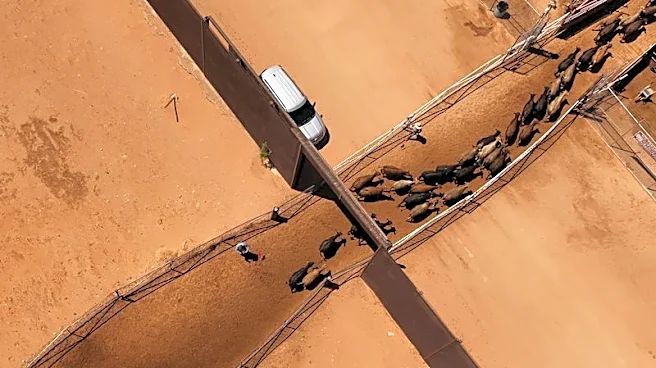
The small border town of Douglas, Arizona, is set to play a pivotal role in the reopening of U.S.-Mexico cattle trade. The U.S. Department of Agriculture announced that Douglas will be the first port of entry to resume Mexican cattle imports when the ban
is lifted on August 24. This decision follows a year-long suspension due to the spread of the New World screwworm in Mexico. The reopening will be subject to a joint action plan, with inspections to prevent the entry of screwworm larvae.
Why It's Important?
The reopening of the Douglas border crossing is significant for the livestock industries in both the U.S. and Mexico. The suspension of cattle imports due to the screwworm outbreak has caused substantial economic losses, particularly for Mexican producers. Resuming trade will help stabilize the livestock market and benefit both economies. The decision to reopen the border highlights the importance of effective biosecurity measures and international cooperation in addressing agricultural challenges.
What's Next?
Following the reopening of the Douglas crossing, other ports such as New Mexico's Santa Teresa and Columbus are expected to follow, although no specific dates have been set. The success of the reopening will depend on the effectiveness of the joint action plan and continued monitoring for screwworm cases. Stakeholders, including government agencies and livestock associations, will need to ensure that biosecurity measures are strictly enforced to prevent further outbreaks and maintain the flow of trade.