






What's Happening?
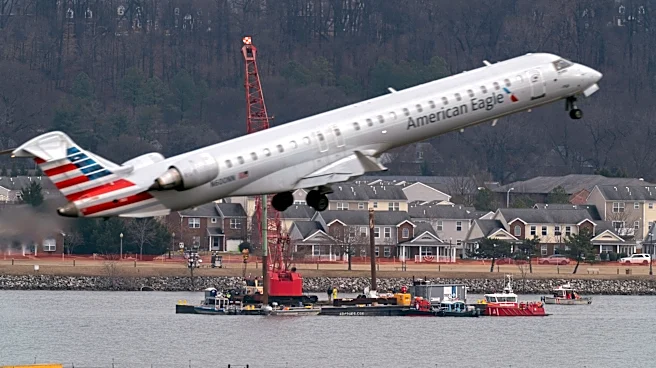
The U.S. House of Representatives has passed the Airspace Location and Enhanced Risk Transparency Act, or ALERT Act, which mandates new aviation safety standards. This legislation comes in response to a deadly midair collision in January 2025 involving
an American Airlines plane and an Army helicopter, which resulted in 67 fatalities. The bill, which passed with a vote of 396-10, requires the Federal Aviation Administration (FAA) to implement Automatic Dependent Surveillance Broadcast (ADS-B) In technology for aircraft already using traffic alert and collision avoidance systems. This technology is designed to provide visual and audible alerts to pilots and crew, enhancing situational awareness and potentially preventing future collisions. The bill has undergone significant revisions since its initial introduction, addressing concerns from various stakeholders, including the National Transportation Safety Board (NTSB), which now supports the legislation.
Why It's Important?
The passage of the ALERT Act is a significant step towards improving aviation safety in the United States. By mandating the use of ADS-B In technology, the bill aims to close critical surveillance gaps that were highlighted by the 2025 collision. This technology could provide pilots with crucial information to avoid midair collisions, thereby enhancing passenger safety. The legislation reflects a bipartisan effort to address safety recommendations from the NTSB, which has been advocating for such measures since 2008. However, the bill's effectiveness will depend on its implementation and the availability of the required technology. The aviation industry, including airlines and pilots, stands to benefit from reduced risks of accidents, while passengers may gain increased confidence in air travel safety.
What's Next?
The ALERT Act now moves to the Senate, where its future remains uncertain. Key senators, including Maria Cantwell, have expressed concerns that the bill does not go far enough in mandating necessary safety measures. The Senate may propose amendments or introduce competing legislation, such as the ROTOR Act, which some believe offers a more comprehensive approach to aviation safety. The families of the 2025 crash victims and the Air Line Pilots Association have also called for stricter requirements and a firmer timeline for implementing the technology. As discussions continue, stakeholders will need to balance the urgency of enhancing safety with the practical challenges of deploying new technologies across the aviation sector.