









What's Happening?
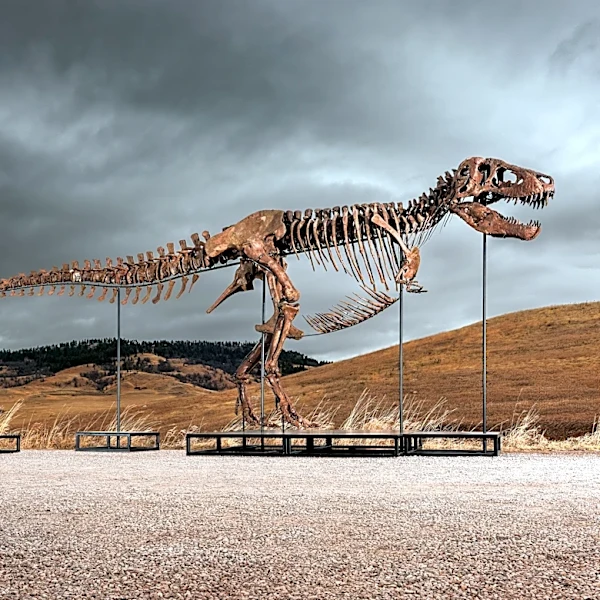
A T. rex fossil named Gus, discovered on a South Dakota ranch, is set to be auctioned at Sotheby’s in New York City. The fossil, one of the most complete T. rex specimens found, could become the most expensive fossil ever sold. However, the sale has sparked
controversy within the scientific community, as private ownership of such fossils often limits scientific study and public access. The Society of Vertebrate Paleontology opposes the sale, arguing that fossils should be held in public institutions to ensure they are available for research and education.
Why It's Important?
The auction of Gus highlights the ongoing debate between private ownership and public stewardship of significant paleontological finds. While private sales can provide financial incentives for fossil excavation, they often result in limited scientific access, hindering research and educational opportunities. This situation underscores the need for policies that balance commercial interests with the preservation of scientific heritage. The outcome of this auction could influence future fossil sales and the availability of important specimens for scientific study.
What's Next?
The auction's result will be closely monitored by both the scientific community and potential buyers. If Gus is sold to a private collector, it may prompt calls for regulatory changes to ensure important fossils remain accessible for research. Museums and public institutions may also explore alternative funding strategies to compete in the fossil market. The debate over fossil ownership is likely to continue, with potential implications for how paleontological resources are managed and preserved.