







What's Happening?
The European Central Bank (ECB) is facing uncertainty regarding its interest rate decisions with less than two weeks until its next meeting. Policymakers are adopting a meeting-to-meeting approach due to volatile oil prices and geopolitical tensions,
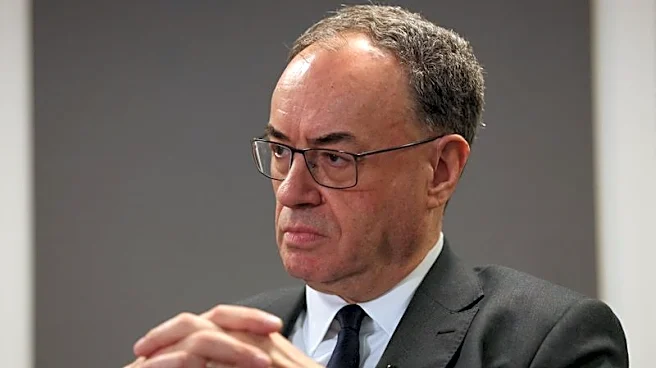
particularly concerning the Strait of Hormuz. ECB officials, including Joachim Nagel, president of Germany's Bundesbank, have highlighted the need to remain flexible in monetary policy decisions. The ECB is expected to keep rates steady at the upcoming meeting, with potential hikes anticipated in June if inflationary pressures persist.
Why It's Important?
The ECB's cautious stance reflects the complex global economic environment, influenced by factors such as oil price volatility and geopolitical tensions. The central bank's decisions will impact the eurozone's economic stability, affecting inflation, growth, and financial markets. Businesses and investors are closely monitoring the ECB's actions, as interest rate changes can influence borrowing costs, investment decisions, and consumer spending. The ECB's approach underscores the challenges central banks face in navigating economic shocks and maintaining stability.
What's Next?
The ECB will continue to assess economic data and geopolitical developments to inform its monetary policy decisions. Policymakers are expected to remain vigilant, with potential rate hikes on the horizon if inflationary pressures increase. The ECB's actions will be closely watched by financial markets, as they could signal broader economic trends and influence global economic conditions. Stakeholders will be attentive to any shifts in the ECB's policy stance and the implications for the eurozone economy.