
What's Happening?
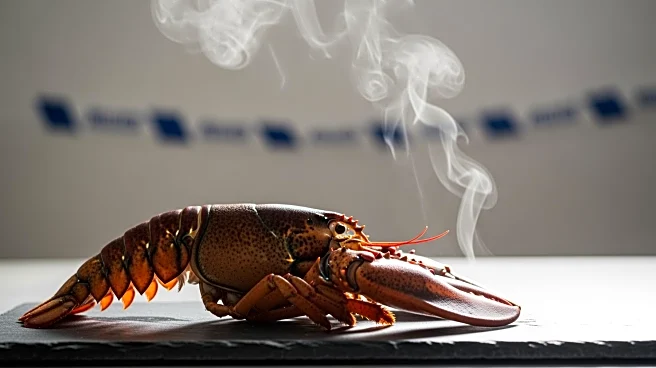
The UK government has announced its intention to ban the live boiling of crustaceans, including crabs, lobsters, shrimp, and prawns, by 2030. This decision is part of a broader animal welfare strategy,
which deems boiling as an unacceptable method of killing. The move follows a review by the London School of Economics, which found that crustaceans possess nociceptors, indicating they can feel pain. The UK joins countries like Switzerland, Norway, and New Zealand, which have already prohibited the practice. A YouGov poll revealed that 65% of UK consumers oppose live boiling, and 75% support more humane slaughter methods. Alternatives such as electrical stunning, cooling, and hydrostatic pressure are being considered to ensure humane treatment without compromising food safety.
Why It's Important?
The ban on live boiling of crustaceans highlights a significant shift in animal welfare policies, reflecting growing public concern over the treatment of sentient beings. This decision could influence other countries to reconsider their practices, potentially leading to widespread changes in the seafood industry. The move also underscores the importance of scientific research in shaping public policy, as evidence of crustaceans' ability to feel pain has been pivotal in driving this change. The seafood industry may need to adapt to new regulations, which could involve investing in alternative methods of slaughter. This could impact production costs and consumer prices, but it also aligns with increasing consumer demand for ethical food practices.
What's Next?
As the UK prepares to implement the ban by 2030, the government will likely engage with stakeholders in the seafood industry to facilitate a smooth transition to humane slaughter methods. This may involve developing guidelines and providing support for adopting new technologies. The industry will need to assess the feasibility and cost-effectiveness of alternatives like electrical stunning and hydrostatic pressure. Additionally, public awareness campaigns may be launched to educate consumers about the changes and the reasons behind them. The UK’s decision could prompt discussions in other countries about similar bans, potentially leading to international collaborations on animal welfare standards.