
What's Happening?
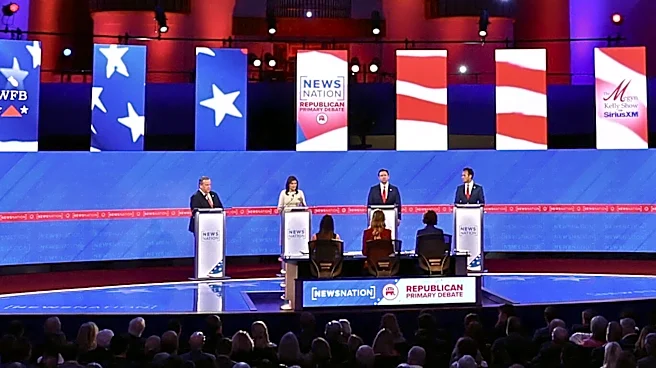
Representative John McGuire, who represents Virginia’s 5th district, has declined an offer to debate his opponent, former Congressman Tom Perriello. The debate was proposed by ABC13 and the University
of Lynchburg for October 13. Multiple attempts were made by ABC13, University President Dr. Sally Coleman Selden, political analyst Dr. Dave Richards, and ABC13 Anchor Pat Simon to reach McGuire's campaign via email, with a deadline of September 18 for a decision. McGuire stated he would only agree to a debate if Perriello apologized for accusations of insider trading. Perriello, who agreed to the debate, has accused McGuire of profiting from stock trades in companies with business before committees he serves on, citing financial disclosures as evidence. Perriello also criticized McGuire for not supporting bipartisan reforms to ban stock trading by members of Congress, instead backing a bill that allows him to continue such activities. Perriello's campaign highlighted McGuire's votes on issues like a war that increased diesel prices, policies that raised health premiums, and tax breaks for data centers, arguing that Virginia families deserve a debate to understand these impacts.
Why It's Important?
This refusal to debate is significant as it limits direct public discourse on critical issues affecting Virginia's 5th district and potentially sets a precedent for future electoral contests. Debates are a cornerstone of democratic processes, offering voters a direct comparison of candidates' stances, policies, and responses to accusations. By declining, Representative McGuire prevents a public forum where he could directly address allegations of insider trading and defend his legislative record on economic and social policies. Conversely, it denies Perriello a direct platform to challenge McGuire's positions and present his own vision to a broader audience. The accusations of profiting from stock trades while serving on relevant committees raise questions about ethical conduct and transparency in public office, which are central to voter trust. The broader implications include a potential reduction in voter engagement and informed decision-making, as constituents are deprived of a direct exchange between candidates on issues such as rising fuel costs, healthcare premiums, and tax policies that impact their daily lives. This situation underscores the ongoing tension between political strategy and the public's right to comprehensive information from their representatives.
What's Next?
With Election Day scheduled for November 3, 2026, the absence of a direct debate between Representative McGuire and Tom Perriello means that voters in Virginia's 5th district will likely rely on other forms of campaigning and media coverage to inform their decisions. Perriello's campaign is expected to continue pressing the issues of McGuire's stock trades and legislative votes, potentially through advertisements, public statements, and rallies. McGuire's campaign will likely focus on his existing messaging and may continue to dismiss Perriello's accusations as politically motivated. The controversy surrounding the debate and the allegations of insider trading could become a central theme in the remaining weeks of the campaign, influencing voter perception and turnout. Other candidates in local races, such as those for Lynchburg City Council, are proceeding with debates, indicating a contrast in campaign approaches. The outcome of this election will not only determine the representative for Virginia's 5th district but could also reflect voter sentiment on issues of political transparency and accountability.
Beyond the Headlines
The refusal of a sitting Congressman to debate his opponent, particularly amidst allegations of financial impropriety, touches upon deeper issues concerning political accountability and the integrity of public service. In an era where public trust in institutions is frequently scrutinized, the decision to avoid a direct public exchange can be perceived as an evasion of responsibility, regardless of the stated reasons. This incident highlights the ongoing debate about ethical standards for elected officials, particularly regarding personal financial dealings that could intersect with their legislative duties. The discussion around 'bipartisan reforms that would actually ban members of Congress from owning and trading individual stocks' suggests a systemic issue that extends beyond individual campaigns, pointing to a broader call for greater transparency and stricter regulations to prevent potential conflicts of interest. The impact on voter cynicism and engagement could be significant, as such events can reinforce perceptions that politicians are not fully transparent or accountable to their constituents. This situation also underscores the evolving role of traditional media in facilitating political discourse when direct candidate interactions are limited, placing a greater burden on journalistic integrity to provide balanced and comprehensive coverage.