






What's Happening?
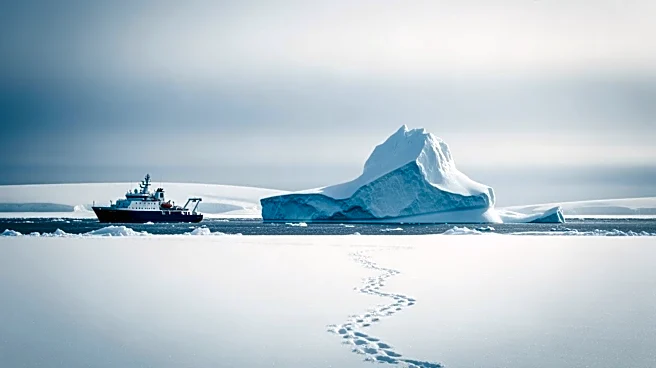
Recent research has identified a significant decline in Antarctic sea ice, which has been on a downward trend for nearly a decade. The study, published in Science Advances, attributes this decline to a combination of intensifying winds and warming ocean
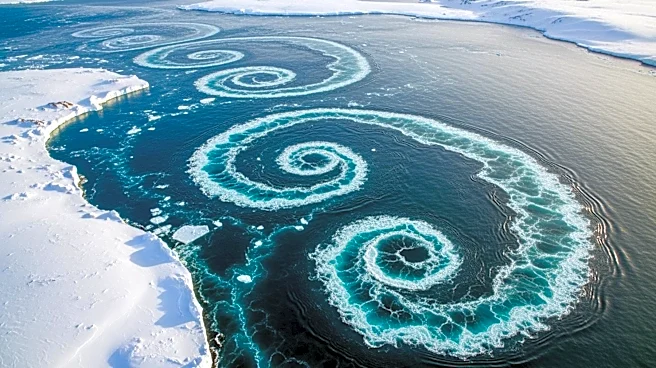
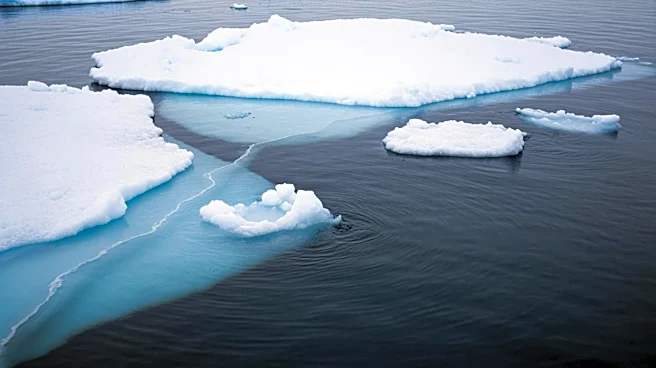
waters, described as a 'triple whammy of climate chaos.' The research highlights that the westerly winds around Antarctica have strengthened, partly due to increased pollution from fossil fuels and the ozone layer hole. These winds initially cooled the ocean surface but later brought warmer, saltier water to the surface, melting sea ice and altering ocean mixing processes. This has led to a cycle where less sea ice results in warmer, saltier surface waters, preventing new ice formation. The study also notes regional differences, with East Antarctica's ice retreat driven by ocean heat and West Antarctica affected more by atmospheric conditions.
Why It's Important?
The decline in Antarctic sea ice has significant implications for global climate systems. Sea ice acts as a reflective barrier, bouncing the sun's energy back into space. Its loss exposes darker ocean surfaces that absorb more heat, accelerating warming. Additionally, the absence of sea ice leaves coastal ice sheets and glaciers vulnerable to melting, potentially raising sea levels. The changes in sea ice also threaten to destabilize ocean currents that regulate heat and carbon storage, potentially transforming the ocean from a climate stabilizer to a driver of global warming. This could have far-reaching effects on global weather patterns, sea levels, and ecosystems.
What's Next?
If the current trend continues, the persistence of low sea ice levels into the 2030s could lead to significant climatic shifts. Scientists warn that the ocean may transition from stabilizing the climate to exacerbating global warming. Continued research is essential to understand the full implications and to develop strategies to mitigate these changes. Policymakers and environmental groups may need to focus on reducing emissions and protecting vulnerable regions to prevent further deterioration.
Beyond the Headlines
The study underscores the complex interplay between atmospheric and oceanic processes in driving climate change. It highlights the need for comprehensive climate models that incorporate these dynamics to predict future changes accurately. The findings also raise ethical considerations about the responsibility of industrialized nations in contributing to climate change and the need for global cooperation in addressing its impacts.