





What's Happening?
Paleontologists Dr. José Luis Carballido and Dr. Matthew McCurry have discovered a new species of sauropod in Patagonia, potentially an early relative of the massive Patagotitan. The excavation site, located near Paso de Indios in Argentina's Chubut province,
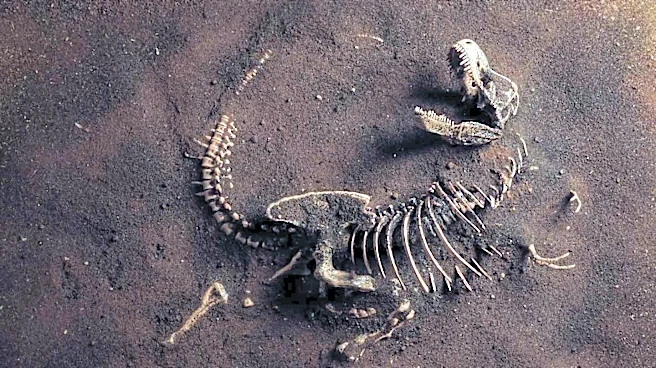
yielded articulated dinosaur bones, including a 1.6-meter femur, parts of limbs, and the first complete sauropod sacrum found in the region. This new species dates back 110 to 115 million years ago, a mysterious phase of the Cretaceous period. The discovery provides crucial insights into the evolution of titanosaurs, a clade that produced the largest land animals ever, such as Patagotitan mayorum, which stood 9 meters tall and stretched over 30 meters long, weighing 57 tonnes. The research aims to understand the factors behind the gigantism of these creatures.
Why It's Important?
This discovery is significant for understanding the evolutionary pressures that led to the extreme gigantism observed in titanosaurs. The presence of large carnivorous dinosaurs like Tyrannotitan chubutensis, which was comparable in size to T. rex, created a predation pressure that likely spurred the evolution of immense size in some sauropods as a defense mechanism. The new fossil material, particularly the complete sacrum, offers unprecedented data for studying the skeletal architecture required to support such massive bodies. Analyzing these bones will help scientists understand how these dinosaurs overcame physiological challenges like feeding, oxygen intake, thermoregulation, and structural integrity, providing a deeper understanding of the limits of biological evolution and the dynamics of Cretaceous ecosystems.
What's Next?
Dr. McCurry and Dr. Carballido are currently analyzing the newly discovered bones to determine the creature's exact place in the titanosaur lineage. This involves scanning and scrutinizing the fossils to piece together its evolutionary story. The findings are expected to shed new light on how evolution produced such colossal animals and potentially challenge existing theories like Cope's law, which suggests a continuous increase in size until an extinction event. The research will also contribute to understanding the paleoclimate and paleoenvironment of Patagonia during the mid-Cretaceous period, when lush forests supported these giants before the aridification caused by the rise of the Andes. The ongoing study promises to refine our understanding of dinosaur biology and the factors driving their extreme adaptations.
Beyond the Headlines
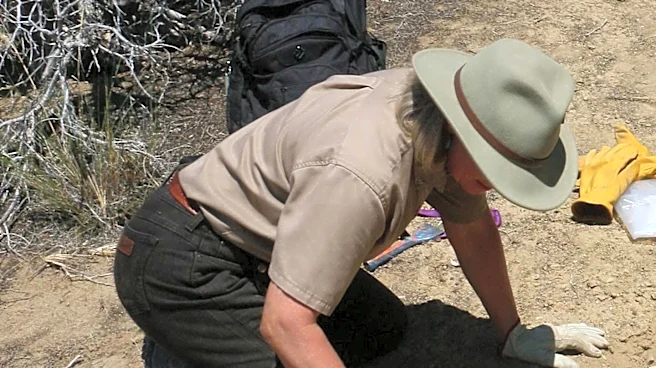
The discovery of this new titanosaur species highlights the ongoing importance of fieldwork and international collaboration in paleontology. The painstaking process of excavation, preservation, and analysis underscores the dedication required to unearth and interpret Earth's ancient history. The challenges faced by these massive creatures, such as maintaining body temperature and supporting immense weight, offer parallels to biological engineering and the physical limits of life. Furthermore, the story of gigantism in dinosaurs provides a compelling narrative about adaptation and survival in response to environmental pressures, resonating with broader themes of ecological balance and evolutionary arms races in nature.