









What's Happening?
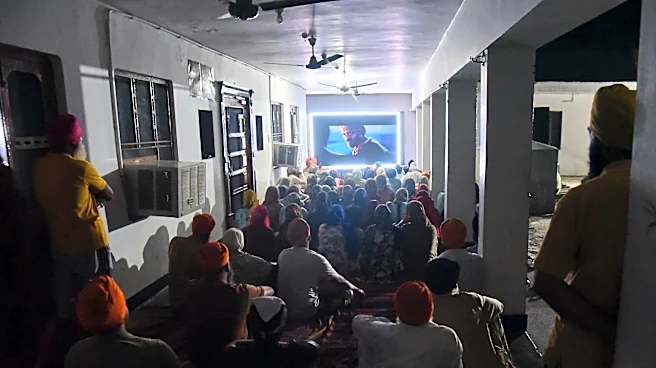
In Punjab, India, community screenings of the film 'Satluj' are taking place after the movie was removed from the ZEE5 streaming platform due to government censorship. The film, which depicts the story of human rights activist Jaswant Singh Khalra, highlights
the extrajudicial killings and disappearances during the Punjab insurgency in the 1980s and 1990s. Despite the Indian government's removal of the film citing security concerns, local Sikh organizations and activists have organized screenings in village temples and community halls. These events have become a platform for revisiting painful memories of the insurgency, as the film resonates with both survivors and younger generations who have only heard fragmented stories of the past.
Why It's Important?
The screenings of 'Satluj' underscore ongoing tensions between artistic expression and government censorship in India. The film's removal has sparked debates about freedom of speech and the right to historical narratives that challenge official accounts. For the Sikh community, these screenings are not just about watching a film but are acts of cultural preservation and resistance against attempts to erase uncomfortable historical truths. The situation highlights the broader issue of how governments manage narratives that may conflict with national security concerns, impacting cultural and historical discourse.
What's Next?
The continued grassroots screenings of 'Satluj' may prompt further government scrutiny or action, potentially leading to legal challenges or increased censorship measures. Conversely, the public's response could encourage more filmmakers and activists to push back against censorship, fostering a broader movement for artistic freedom in India. The film's international reception and the response from human rights organizations could also influence the Indian government's stance on censorship and historical narratives.
Beyond the Headlines
The film's story and the community's response highlight the enduring impact of historical trauma and the role of art in healing and education. The screenings serve as a reminder of the power of collective memory and the importance of preserving diverse historical perspectives. This situation also raises questions about the ethical responsibilities of streaming platforms in balancing government regulations with the rights of creators and audiences.