







What's Happening?
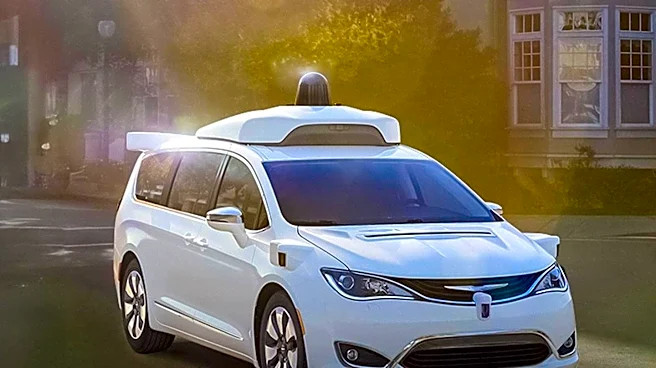
Shenzhen, a city once known as a fishing village, has transformed into a hub of technological innovation, often compared to Silicon Valley. A key highlight of this transformation is the introduction of fully driverless taxis by Pony.ai. These taxis, hailed
through the Pony Pilot app, operate without any human intervention, navigating traffic and stopping at lights autonomously. This service is part of a broader high-tech experience in Shenzhen, which includes the world's largest electronics market at Huaqiangbei and drone-delivered food services. The city has rapidly grown from a population of 314,000 in 1979 to over 11 million by 2016, reflecting its status as a Special Economic Zone since 1980.
Why It's Important?
The deployment of self-driving taxis by Pony.ai in Shenzhen represents a significant milestone in the advancement of autonomous vehicle technology. This development not only positions Shenzhen as a leader in tech innovation but also sets a precedent for urban transportation systems worldwide. The success of such initiatives could influence U.S. cities considering similar technologies, potentially reshaping public transportation and reducing reliance on human-operated vehicles. Moreover, the integration of such technologies could lead to economic benefits, including job creation in tech sectors and increased efficiency in urban logistics.
What's Next?
As Shenzhen continues to embrace technological advancements, other cities may look to replicate its model of integrating high-tech solutions into urban life. The success of Pony.ai's driverless taxis could encourage further investment in autonomous vehicle technology, both in China and internationally. Additionally, regulatory frameworks may evolve to accommodate these innovations, potentially influencing global standards for autonomous vehicles. Stakeholders, including tech companies and urban planners, will likely monitor Shenzhen's progress closely to assess the viability and scalability of such technologies in different urban environments.
Beyond the Headlines
The rise of autonomous vehicles in Shenzhen raises important ethical and legal questions, such as data privacy, cybersecurity, and the impact on employment in traditional driving jobs. As these technologies become more prevalent, there will be a need for comprehensive policies to address these concerns. Furthermore, the cultural shift towards automation may alter societal interactions, reducing face-to-face communication and changing the dynamics of urban life. Long-term, these developments could redefine the concept of mobility and urban living.