




What's Happening?
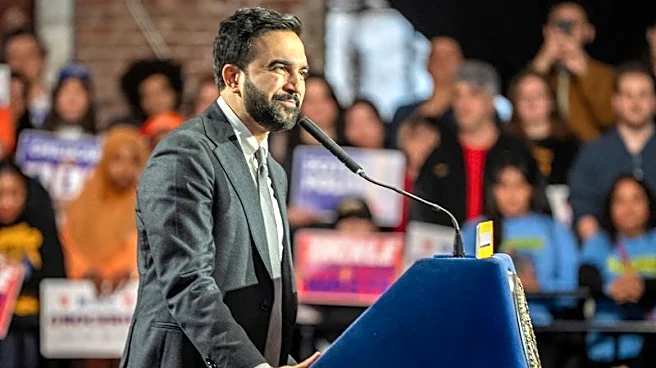
Mayor Zohran Mamdani of New York City has announced plans to open city-owned grocery stores across the five boroughs as part of his initiative to make groceries more affordable for residents. The first site selected for this project is La Marqueta in East
Harlem, a location with historical significance as it was once a city-owned public market. The initiative aims to address the rising cost of groceries, which have increased by nearly 66% in New York City over the past decade, significantly higher than the national average. The city plans to subsidize a core set of food staples to ensure they are sold at lower prices compared to other supermarkets. A private operator will manage the stores under city-set standards, ensuring affordability and fair treatment of workers. The project is part of Mamdani's broader agenda to make New York City more affordable and is expected to have all five stores operational by the end of his first term in 2029.
Why It's Important?
The introduction of city-owned grocery stores is a significant step towards addressing food affordability in New York City, where many residents struggle with high living costs. By subsidizing essential food items, the city aims to alleviate financial pressure on low-income families, particularly in areas like East Harlem, where a large percentage of residents rely on public assistance. This initiative could serve as a model for other cities facing similar challenges, demonstrating how local governments can intervene to stabilize food prices and support vulnerable communities. The project also highlights the potential for public-private partnerships in managing essential services, with the city setting standards to ensure fair pricing and labor practices.
What's Next?
The next steps involve the construction and operational setup of the first grocery store at La Marqueta, with an estimated cost of $30 million. Mayor Mamdani and Deputy Mayor for Economic Justice Julie Su will oversee the progress, ensuring that the stores meet the city's affordability and quality standards. As the project develops, it will be crucial to monitor its impact on local grocery markets and assess its effectiveness in reducing food insecurity. The initiative may prompt discussions among policymakers and community leaders about expanding similar models to other essential services.