



What's Happening?
Efforts are underway in South Dakota to assist voters facing obstacles in reaching polling places. These barriers include long rural distances, road construction in Rapid City, and issues with voter registration. The Carnegie Foundation has identified
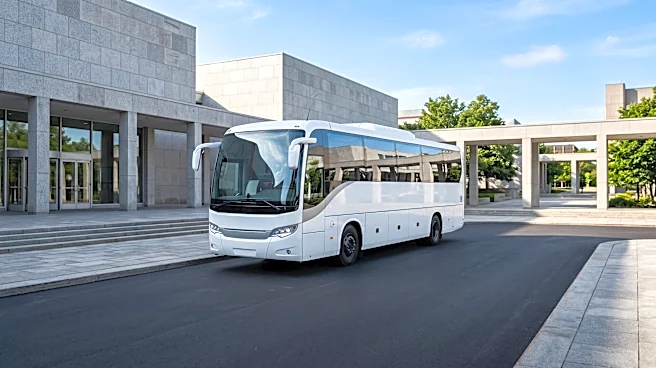
ID rules, fewer polling sites, and reduced hours as significant impediments to voting, while Pew Research indicates a consistent lag in minority voter turnout compared to white turnout. District 27 Senate candidate Celestine Stadnick has initiated a free ride service across several districts, open to all voters regardless of party affiliation, to help bridge the transportation gap. In Rapid City, where South Street construction impedes access to the District 32 polling place at West Park Apartments, Monument Health is offering free parking at its 11th Street Health Science lot to allow voters to walk to the polls. National rideshare services like Rideshare2Vote do not operate in South Dakota, making local initiatives crucial for rural residents lacking transportation.
Why It's Important?
These initiatives are crucial for upholding democratic principles by ensuring broader access to voting for all eligible citizens in South Dakota. By addressing practical barriers such as transportation and polling place accessibility, these efforts aim to increase voter participation, particularly among rural residents and minority groups who have historically faced greater challenges. The provision of free rides and parking directly tackles logistical hurdles that can disenfranchise voters, reinforcing the idea that every citizen's right to vote should be protected and facilitated. This local action highlights the ongoing need for community-led solutions to systemic voting access issues, especially in areas where state-wide or national services are insufficient. The success of such programs could serve as a model for other regions facing similar challenges, emphasizing the importance of local engagement in strengthening democratic processes.
What's Next?
As Election Day proceeds, the immediate focus will be on the effectiveness of these voter assistance programs in increasing turnout. Organizers will likely monitor the number of voters utilizing the free rides and parking to assess the impact of their efforts. Post-election, there may be evaluations of these initiatives to determine their scalability and potential for future implementation in subsequent elections. Discussions could arise regarding the need for more permanent solutions to voter access issues, potentially influencing future legislative efforts to expand transportation options or polling site accessibility. Furthermore, the visibility of these efforts might encourage other community leaders or organizations to launch similar programs, fostering a broader movement to address voter access challenges across the state and potentially beyond.
Beyond the Headlines
Beyond the immediate goal of increasing voter turnout, these efforts underscore deeper societal issues related to civic engagement and equity. The fact that such grassroots initiatives are necessary points to systemic gaps in ensuring universal access to democratic processes. It highlights how socioeconomic factors, geographic location, and infrastructure can disproportionately affect certain populations' ability to exercise their fundamental rights. This situation also brings to light the role of individual candidates and community organizations in filling voids left by broader governmental or commercial services. The non-partisan nature of these efforts, as emphasized by candidate Stadnick, reinforces the idea that voter access is a fundamental right transcending political affiliations, fostering a more inclusive and representative democracy.