


What's Happening?
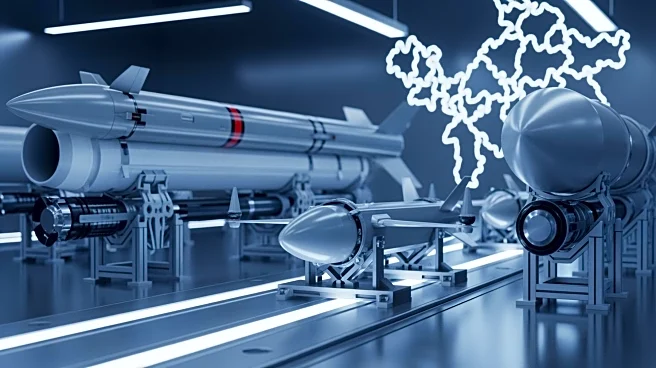
The United States, along with its allies, has announced a new initiative to enhance defense manufacturing capabilities in the Asia-Pacific region. This initiative, led by the Partnership for Indo-Pacific Industrial Resilience (Pipir), aims to establish
a missile motor production program in collaboration with Japan. Additionally, the group plans to develop common standards and shared supply chains for small military drones across the region. The partnership is also exploring the possibility of setting up a new ammunition production line in the Philippines. This move is part of a broader strategy to reduce supply chain risks and ensure that military equipment is produced closer to potential areas of need. The partnership recently expanded to include Thailand and the United Kingdom, bringing its total membership to 16 countries.
Why It's Important?
This initiative is significant as it represents a strategic shift in defense manufacturing, aiming to decentralize production and reduce reliance on the United States. By establishing production capabilities in the Asia-Pacific region, the partnership seeks to enhance regional security and resilience against potential threats. The involvement of countries like Japan and the Philippines indicates a strengthening of military ties and cooperation in the region. However, this move has faced opposition from some political groups in the Philippines, who argue that it could increase the country's exposure to military conflicts and deepen its dependence on foreign military strategies. The initiative could have broader implications for regional security dynamics and the global defense industry.
What's Next?
The next steps for the partnership include finalizing the details of the missile motor production program with Japan and setting up the ammunition production line in the Philippines. The group will also continue to work on developing standards for drone manufacturing and supply chains. These efforts are likely to involve further negotiations and collaborations among the member countries. The initiative may also prompt reactions from other regional powers, potentially influencing geopolitical dynamics in the Asia-Pacific region.
Beyond the Headlines
The establishment of defense manufacturing capabilities in the Asia-Pacific region could have long-term implications for global military strategies and alliances. It may lead to increased militarization in the region and could influence the balance of power among major global players. Additionally, the initiative raises ethical and economic questions about the role of arms manufacturing in national economies and its impact on public policy. The opposition from political groups in the Philippines highlights the potential domestic challenges and debates surrounding such initiatives.