








What's Happening?
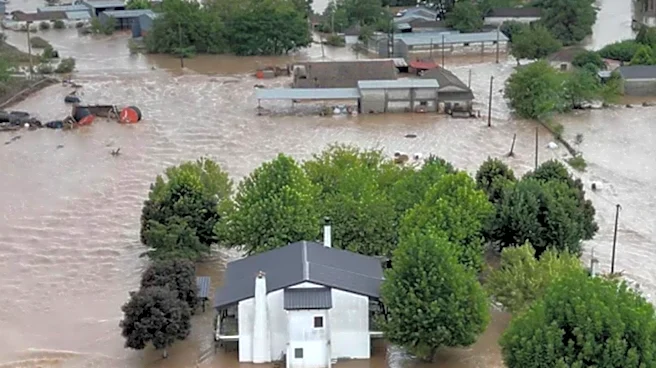
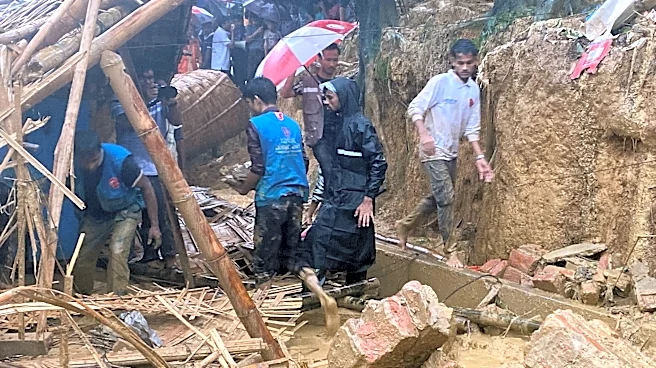
The Bangladesh government is actively mapping out flood damage to provide support to affected farmers, as announced by Agriculture, Fisheries and Livestock Minister Mohammad Amin Ur Rashid. Local administrations are gathering detailed information on impacted
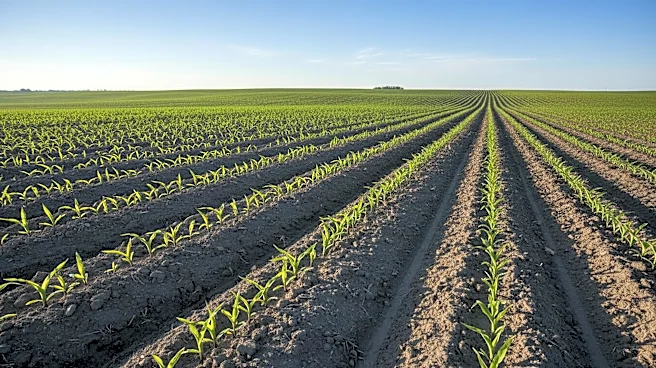
farmers to ensure timely rehabilitation assistance. This initiative follows directives from the Prime Minister to aid farmers in recovering and resuming agricultural activities swiftly. The minister emphasized the government's commitment to transforming Bangladesh into a pollution-free nation through extensive tree plantation programs. Additionally, a phased plan to establish mini-cold storage facilities across the country is underway to mitigate post-harvest losses and protect farmers from price volatility.
Why It's Important?
The government's response to the recent floods is crucial for the agricultural sector, which supports approximately 75% of Bangladesh's population. By providing timely assistance and infrastructure improvements, the government aims to stabilize the livelihoods of farmers and enhance agricultural productivity. The establishment of mini-cold storages is particularly significant as it addresses the challenges of preserving produce and maintaining fair market prices. These efforts are expected to bolster the agricultural economy, ensuring food security and economic stability for millions of Bangladeshis.
What's Next?
As the government compiles data on affected farmers, the next steps involve distributing rehabilitation aid and implementing infrastructure projects. The success of these initiatives will depend on effective coordination between local administrations and national agencies. Monitoring the progress of cold storage construction and evaluating the impact of tree plantation programs will be essential to achieving long-term agricultural sustainability. The government may also explore additional measures to enhance disaster resilience and support for the agricultural sector.