





What's Happening?
Lindy Tarr, a resident of Savannah, Missouri, is preparing for another winter season by continuing her long-standing initiative to build free outdoor cat shelters. For approximately a decade, Tarr, her family, and her late friend Rich Claycomb, have been
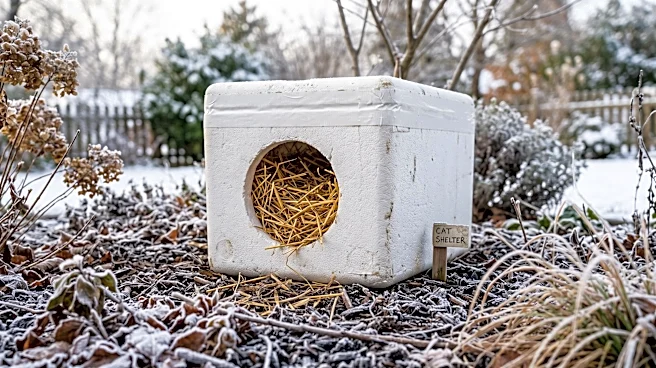
constructing these shelters from discarded styrofoam coolers. This project gained even greater personal significance for Tarr following Claycomb's recent passing. Together, they have produced nearly 400 shelters, which have been distributed to the Savannah and St. Joseph areas. As a veterinary technician, Tarr's deep affection for cats motivates her efforts, driven by a concern for outdoor and stray cats lacking warm places during winter. She emphasizes that the shelters require minimal materials: appropriately sized styrofoam coolers, tape, and straw, specifically noting that straw is preferred over blankets or hay to ensure a dry and warm environment for the animals. Tarr is currently making shelters for the 2026-2027 winter season and plans to advertise their availability on Facebook for those in need. She also intends to share information on how others can continue this initiative through her Facebook account.
Why It's Important?
This initiative is important because it addresses a critical welfare issue for outdoor and stray cat populations in the Savannah and St. Joseph areas, particularly during harsh winter months. Providing warm, dry shelters can significantly improve the survival rates and overall well-being of these vulnerable animals, protecting them from exposure and frostbite. Lindy Tarr's dedication highlights the impact that individual community members can have on local animal welfare. Her efforts not only offer immediate relief to cats but also raise awareness about the challenges faced by outdoor animals and the simple, cost-effective solutions available. The use of discarded styrofoam coolers also promotes a form of recycling and repurposing, turning waste into a valuable resource for animal protection. Furthermore, Tarr's desire to pass on her knowledge and encourage others to continue the tradition underscores the potential for community-wide engagement in animal welfare, fostering a more compassionate and responsible approach to local animal populations.
What's Next?
Lindy Tarr is actively constructing shelters for the upcoming 2026-2027 winter season. She plans to announce the availability of these shelters on Facebook, making them accessible to individuals who can provide them to outdoor cats. As Tarr may be relocating from the Savannah area soon, a key next step involves her efforts to encourage other community members to take over the shelter-building initiative. She is prepared to offer guidance and instructions through her Facebook account to anyone interested in continuing this valuable work. The success of this transition will determine the long-term sustainability of the program in the Savannah area. If new volunteers step forward, the tradition of providing essential winter shelters for outdoor cats could continue, ensuring that these animals receive protection in future cold seasons. This community-driven approach could also inspire similar initiatives in other regions facing similar challenges with stray animal populations.