



What's Happening?
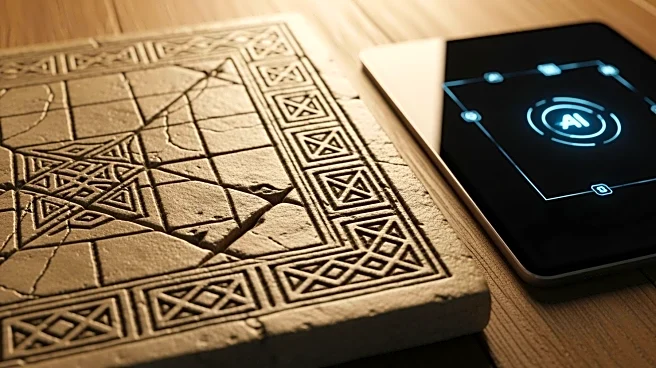
A Roman-era board game, long considered a mystery by scientists, has been decoded by an AI system named Ludii. The game, discovered on a limestone stone in Herleen, Netherlands, was initially thought to be a game due to the wear patterns on the stone's
surface. Researchers from Maastricht University programmed Ludii with rules from medieval and older games from the same cultural area. The AI played thousands of rounds, identifying potential rulesets that matched the wear patterns. The game, now called the 'Coriovallum Game,' is a blocking game similar to tic-tac-toe, where players aim to trap their opponent's pieces. This discovery challenges previous beliefs that such games only emerged in Europe during the Middle Ages.
Why It's Important?
The successful use of AI to decode the Roman-era game highlights the potential of technology in archaeological research. This breakthrough could lead to the rediscovery and understanding of other ancient games and cultural artifacts. The findings suggest that similar games may have existed in Roman times, prompting a reevaluation of Roman period artifacts previously dismissed as graffiti. The study demonstrates AI's capability to analyze historical artifacts, offering new insights into ancient cultures and their recreational activities. This could influence future archaeological methodologies and the preservation of cultural heritage.
What's Next?
Following this discovery, researchers may apply similar AI techniques to other ancient artifacts, potentially uncovering more about historical games and cultural practices. The success of Ludii could inspire further development of AI systems tailored for archaeological research, enhancing the accuracy and speed of artifact analysis. Museums and cultural institutions might collaborate with tech developers to explore AI's role in historical studies, potentially leading to new exhibitions and educational programs that engage the public with ancient history.