

What's Happening?
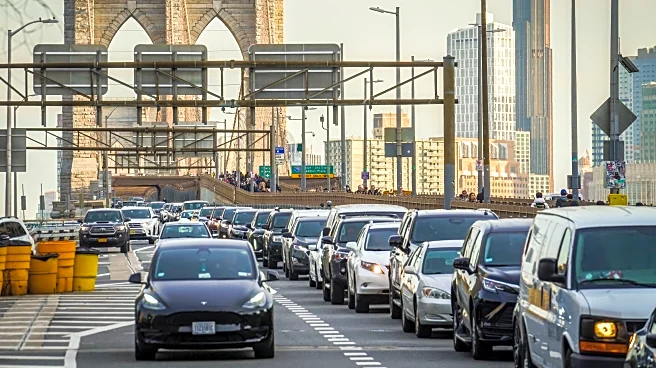
A federal judge has ruled in favor of continuing congestion pricing in New York City, rejecting efforts by the Trump administration to halt the initiative. Congestion pricing is a system designed to reduce traffic congestion by charging vehicles entering
certain areas of the city during peak times. The decision marks a significant step in New York City's efforts to manage traffic and reduce pollution. The Trump administration had opposed the plan, arguing it would unfairly burden commuters and businesses. However, the court's decision allows the city to proceed with its plans, which are expected to generate significant revenue for public transportation improvements.
Why It's Important?
The ruling is a pivotal moment for urban transportation policy in the United States, as New York City becomes the first major city in the country to implement congestion pricing. This decision could set a precedent for other cities considering similar measures to combat traffic congestion and environmental concerns. The revenue generated from congestion pricing is intended to fund public transportation projects, potentially improving infrastructure and reducing reliance on personal vehicles. This could lead to broader environmental benefits and a shift in urban planning priorities. The decision also highlights the ongoing tension between federal and local governments over transportation and environmental policies.
What's Next?
With the legal challenge resolved, New York City is expected to move forward with implementing congestion pricing. The city will need to finalize the details of the pricing structure and ensure that the system is ready for operation. Stakeholders, including local businesses and commuters, will be closely monitoring the rollout to assess its impact on daily life and economic activity. Additionally, other cities may look to New York's experience as a model for their own congestion management strategies. The decision may also prompt further discussions at the federal level about the role of government in urban transportation planning.