

What's Happening?
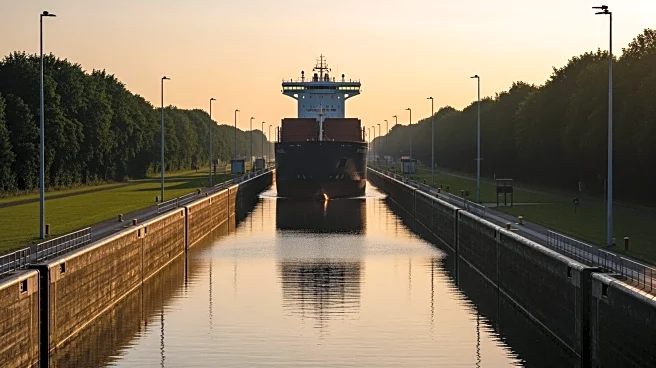
The Panama Canal is experiencing a rise in vessel transits due to the ongoing conflict in the Strait of Hormuz, which has led to increased fuel and freight prices. According to Ilya Espino de Marotta, the deputy administrator of the Panama Canal, the canal
has seen a slight increase in the number of daily transits, reaching up to 41 compared to the usual 36. This increase is facilitated by an unusually moist dry season, which has allowed the canal to accommodate more ships. The Panama Canal, a crucial waterway connecting the Atlantic and Pacific Oceans, has become a more attractive route due to its shorter length compared to the Suez Canal. The canal's ability to handle more transits is significant, especially after the extreme droughts caused by the El Niño weather phenomenon in 2023 and 2024, which had previously reduced the number of daily transits.
Why It's Important?
The increased use of the Panama Canal highlights its strategic importance in global trade, especially during geopolitical conflicts that disrupt traditional shipping routes. The conflict in the Strait of Hormuz, a critical chokepoint for global oil and liquefied natural gas (LNG) trade, has forced shipping companies to seek alternative routes. This shift benefits the Panama Canal, as it offers a shorter and potentially more cost-effective path for transporting goods, particularly LNG, to Asia. The canal's ability to handle increased traffic can help stabilize global supply chains and mitigate some of the economic impacts of the conflict. However, the sustainability of this increased capacity remains a concern, as maintaining higher transit numbers over time could strain the canal's resources.
What's Next?
As the conflict in the Strait of Hormuz continues, the Panama Canal may see further increases in traffic, particularly from Asian markets seeking alternative energy sources. The canal's administration will need to balance the demand for increased transits with the sustainability of its operations. Additionally, geopolitical developments, such as the ongoing situation between Russia and Europe, could influence the flow of LNG and other goods through the canal. The canal's role in global trade may expand further if it can consistently accommodate higher transit numbers without compromising its infrastructure.